Quick Summary
TL;DR: Highest-engaging Facebook Ads win because they capture attention fast, feel native to the feed, and focus on retention and real engagement instead of vanity reach. Higher retention reduces CPC, improves delivery, increases ROAS, and strengthens AI search visibility through better dwell time and engagement signals #tldr
- Main Takeaway:
Creative quality drives performance more than targeting or budget. Strong hooks, short videos, and constant testing lower costs and improve conversions.
- Common Mistakes:
Over-polished corporate style → Slow intros → Weak hooks → No captions → Creative fatigue → Optimizing for clicks instead of conversions
- Building High-Engagement Ads:
Research audience pains → Script hooks first → Capture raw, authentic footage → Edit for retention → Test multiple creatives weekly → Pause losers quickly → Scale winners based on data
Most ads fail not because of budget issues, but because people scroll past them. You can spend a lot on reaching your audience, but if your ad doesn’t catch their attention, you won’t get any return. That’s why it’s important to study the most engaging Facebook ads instead of just focusing on how many people saw your ad. Impressions show how often your ad was shown, but engagement tells you whether people care about it. Clicks, watch time, comments, and conversions drive revenue, not just views on a dashboard.
The gap between reach and real interest is bigger than most marketers think. 69.6% of marketers leverage Facebook in their marketing strategy. Secondly, only to sister platform Instagram at 70%, according to the HubSpot State of Marketing Report, 2026.
Many brands improve their strategies by using effective methods to create eye-catching visuals and clear messages, like these practical methods for crafting better ad structures, and by keeping up with how the platform surfaces and prioritizes content through ongoing algorithm shifts.
What Makes the Highest-Engaging Facebook Ads Different from Average Ads
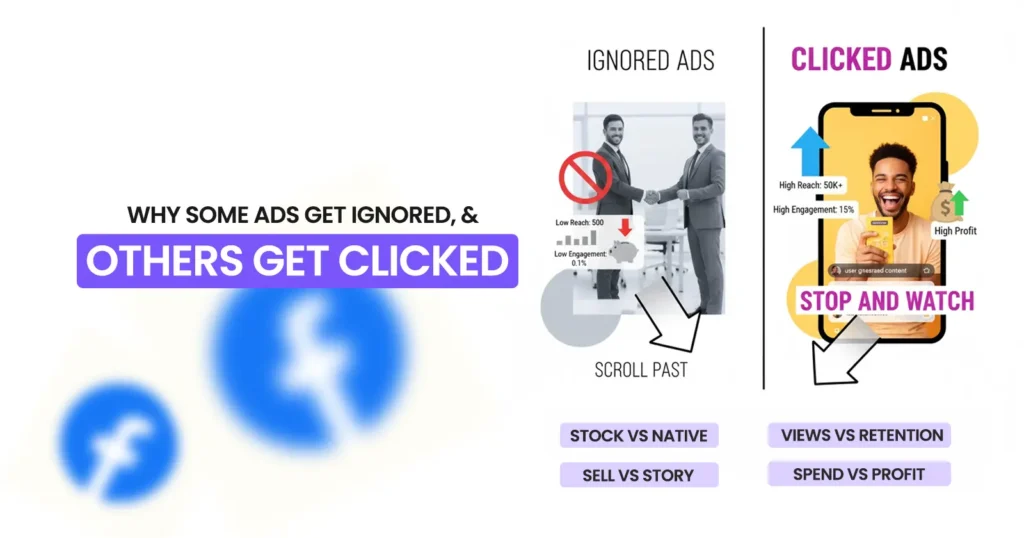
Before we talk about metrics or benchmarks, it helps to understand one simple truth. Performance usually comes from creative quality, not bigger budgets. The highest-engaging Facebook ads feel natural, human, and worth watching. They do not look like ads trying too hard to sell. They get attention fast, offer value quickly, and make people curious right away. This is what makes some ads waste money while others help you get better results over time.
If your ads feel average, they will get average results. ShortVids helps you create videos people actually watch and interact with. Ready to level up your ads?
Engagement vs Vanity Metrics
Many brands still focus on impressions and reach, but these numbers do not always show real revenue. Engagement metrics tell a clearer story. Numbers like how many people watch your video for 3 seconds, how long they watch, comments, saves, shares, and clicks show if they like your content. When people watch longer or interact more, your ad gets shown more often and costs less.
From what I have seen, ads that keep people watching usually cost less and get more results. The platform rewards content that keeps users engaged. This is why engagement is important for growth, not just a nice number.
For AI search visibility, engagement signals also matter. Content that keeps visitors on the page longer, gets more clicks with or without generative AI features, and has a higher dwell time is usually cited more in AI summaries and answer engines. These behavioral signals help search systems trust your content.
Scroll-stopping Psychology
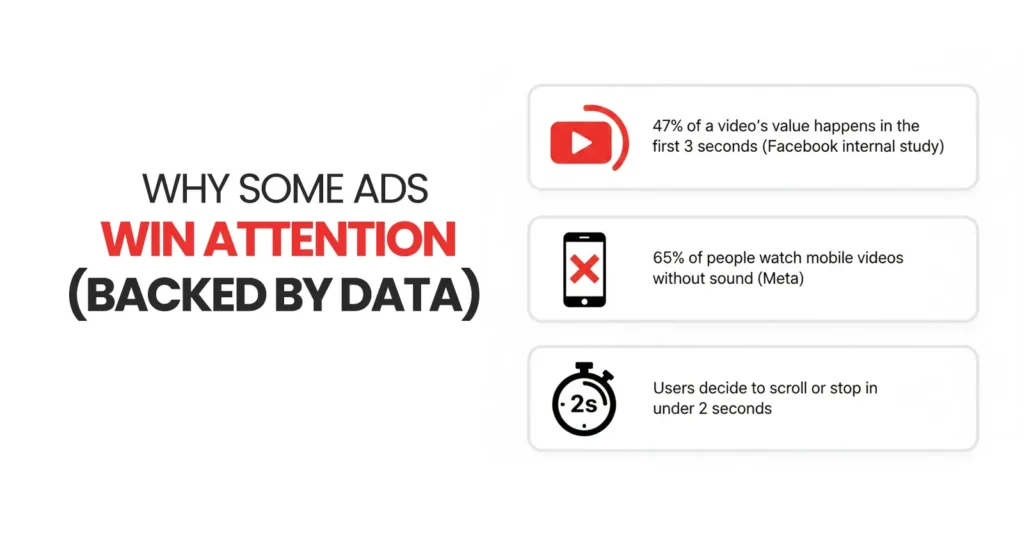
People scroll through videos really fast. In just 1 or 2 seconds, they decide if they want to keep watching. That’s why the first part of an ad is so important. Good ads start with movement, feelings, or a clear problem. A striking picture or a surprising sentence can catch people’s attention. If you get their attention for a moment, you can share your story.
Sometimes, shaky and raw videos from phones work better than polished ones. They feel real and fit in better with what people are already watching.
Creative First, Targeting Second
Targeting is still important, but it can’t fix weak creative. Even ads that reach the right audience will fail if the message feels generic. On the other hand, strong creatives often perform well across multiple audiences because they speak to real pain points.
Many teams see better results when they improve the idea and format first, then layer targeting on top. A good starting point is testing proven frameworks that align visuals, hooks, and offer more intentionally, like practical approaches to structuring campaigns.
This creative first mindset builds trust with both users and algorithms, which supports stronger SEO signals and better AI search inclusion over time.
Why Most Ads Get Ignored in 2 Seconds
Most ads fail for simple reasons. They look like every other ad and start slow. They talk about the brand instead of the viewer. When the first line says “We are the best,” people scroll. When it shows a relatable problem or outcome, people stay.
Video storytelling is very important for connecting with an audience. People remember stories better than simple claims. Brands that share their messages as a short journey often get more views and a stronger emotional reaction.
To learn how to create these narratives, you can look at examples of organizing content around story arcs. That human element is what makes ads feel less like marketing and more like content.
Average vs. High-performing Creatives
| Average Ads | Highest Engaging Facebook Ads |
|---|---|
| Generic visuals | Strong hook in first 3 seconds |
| Stock creatives | Native, real, human footage |
| Salesy copy | Storytelling and outcomes |
| Low CTR | High retention and stronger watch time |
When you zoom out, the difference is rarely technical. It is emotional. The highest-engaging Facebook ads that win simply feel more relevant and more worth a few extra seconds of attention. That small shift is often what turns average performance into consistent growth.
Core Metrics That Define the Highest-Engaging Facebook Ads
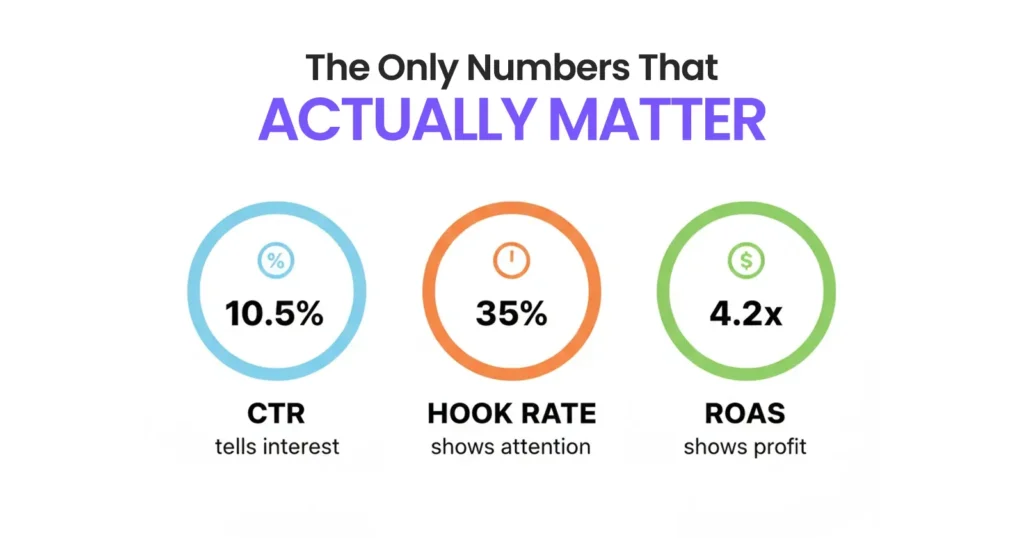
The most effective Facebook Ads don’t rely on flashy designs or large budgets. Instead, they depend on a few key numbers that show attention, intent, and profitability. By tracking the right metrics, you can predict performance instead of guessing.
Many teams get lost in dashboards filled with over 30 data points. In reality, you only need five or six key metrics to get most of the information you need. These metrics drive revenue and help you grow confidently.
Click Through Rate (CTR)
CTR is still one of the simplest signals of relevance. If people are clicking, your message matches their intent. If they are not, something feels off. Your ad may not be performing well because of a weak hook, an unclear offer, or a design that looks like other ads in the feed.
If the engagement rate is below 1%, it likely means people are ignoring the ad. When the rate hits 2% to 3%, you’re in a better position, and costs may drop since the platform rewards ads that engage people. It is important to track your performance clearly. Before optimizing anything else, you need clean reporting and structured breakdowns. A practical way to think about this is building your process around proper tracking and attribution first.
From an AI search perspective, strong CTR thinking also helps your content. Headlines and hooks that earn clicks improve dwell time and engagement, which increases the chance of being surfaced or quoted in AI answers.
Hook Rate (First 3-second Retention)
Hook rate shows how many people stay past the first few seconds. For video ads, this is more important than CTR. If viewers drop off instantly, the rest of the ad doesn’t matter.
This is where the highest-engaging Facebook ads quietly outperform average ones. They win the first three seconds with movement, a bold statement, or a relatable pain point. Give clear and quick help. When more people are interested, everything gets better. People watch for longer, costs go down, and it’s cheaper to get customers.
Cost Per Result
Cost per result tells us how well a system turns attention into action. If the cost is low, it means the ad is working well. If the cost is high, there might be problems that need fixing.
Some companies think spending more money will help, but that usually doesn’t work. Spending more can actually make the problems worse. Bigger budget Facebook ads only make sense after you have proven efficiency at a smaller level. Once the basics are strong, scaling strategies like these can help expand reach without losing profitability.
Engagement Rate
Engagement rate includes likes, comments, shares, saves, and longer views. It shows how much people care, not just whether they saw the ad.
High engagement is good for your ad. When people interact with your ad, it shows that it’s interesting. This helps the ad reach more people without costing too much.
Also, when viewers see comments and likes, they trust the ad more. More interactions help your ad show up more often online. It can rank better and get shared because it shows that people care about it.
Low engagement means wasted reach. ShortVids creates high-impact Facebook ads that drive real interactions and better performance. Ready to boost your results?
Return on Ad Spend (ROAS)
Return on ad spend keeps everything grounded. You can achieve a high CTR and good engagement, but if you don’t make money, the campaign isn’t working. A healthy return on ad spend (ROAS) comes from a well-aligned strategy throughout the entire customer journey.
This means you need a strong hook, a clear value, a smooth landing page, and a relevant offer. If any part of this breaks, your returns will drop quickly. Think of ROAS as your final score. All the other metrics are leading indicators that help you fix problems before revenue suffers.
Frequency and Ad Fatigue
Frequency measures how often the same person sees your ad. If it gets too high, people tune out. Performance drops and costs rise. This is classic ad fatigue.
Many underperforming campaigns are not broken. They are simply overexposed. Changing your pictures or styles can help fix problems faster than changing who you are trying to reach. If your results get worse suddenly, see if people are tired of the same ads instead of changing your plan. Many campaigns struggle for predictable reasons, as outlined clearly here.
Testing different formats can also help reset attention. In many cases, short vertical videos outperform static designs because they feel more native to the feed.
Engagement Benchmarks for 2026
| Metric | Poor | Good | High Performing |
|---|---|---|---|
| CTR | < 0.8% | 1-2% | 3%+ |
| CPC | High | Medium | Low |
| Hook rate | < 20% | 30-40% | 50%+ |
| Video watch time | Low | Medium | High |
| ROAS | < 1.5 | 2-3 | 4+ |
If you focus on improving just these numbers, you will already be ahead of most advertisers. They keep the strategy simple, measurable, and easier for both humans and AI systems to interpret, which helps your content get cited, summarized, and discovered across search and answer engines.
7 Highest-Engaging Facebook Ads Examples (With Breakdown)
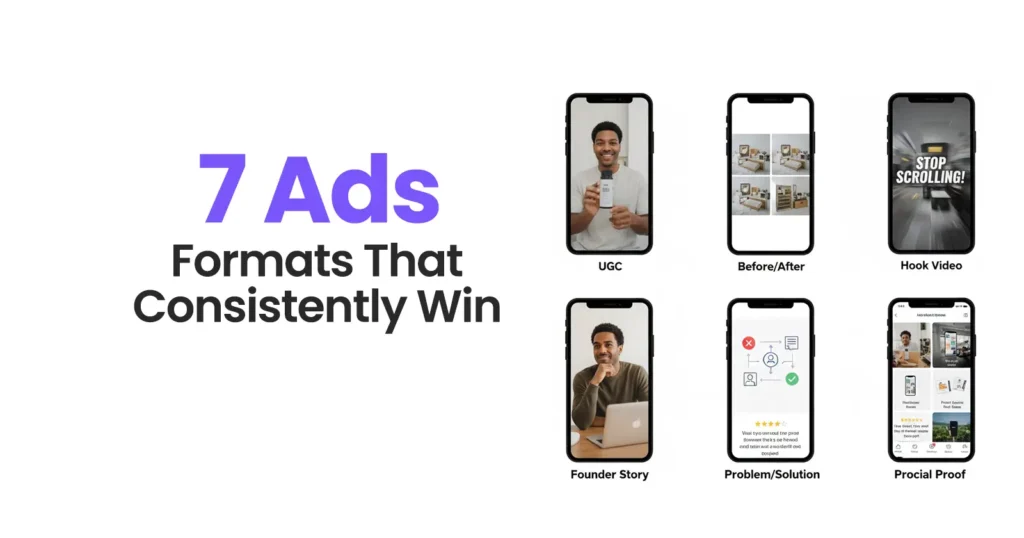
The quickest way to understand what works is to look at actual examples, not just theory. The most engaging Facebook ads usually follow a few simple formats that drive clicks, views, and conversions. When you analyze these ads, you will see the same psychological patterns appear repeatedly.
Below are seven practical examples with structure, hook style, copy angle, and the kind of metrics you can realistically expect when execution is solid. These formats are based on campaigns that prioritize retention, relevance, and clear messaging, which also helps with AI search visibility since content with higher engagement and dwell time gets surfaced more often in summaries and answer engines.
Example 1 – UGC Testimonial Video
Format
Vertical selfie-style video filmed on a phone.
Hook Style
“I didn’t think this would work but…”
Copy Angle
Personal experience and honest results instead of polished claims.
Expected Metrics
CTR is about 2% to 4%. More than 40% of people watch for at least 3 seconds. It costs less to click on these ads than on studio ads.
Why It Works
These ads look like regular posts. People trust other people more than they trust companies. This makes viewers stop and look instead of scrolling past.
To make the ad better, use short video clips and easy-to-read captions. Keeping the pacing tight and mobile-friendly makes a big difference, which is why many teams follow practical short-form techniques.
Example 2 – Before/After Transformation Ad
Format
Split-screen or side-by-side visual.
Hook Style
“30 days later” or “Here’s what changed.”
Copy Angle
Clear proof of improvement.
Expected Metrics
Keep your hook rate over 45%. Work on getting more saves and shares to help more people choose your product.
Why It Works
Transformation content arouses curiosity. People want to see the outcome, which makes them watch longer. This increased watch time shows that the algorithm considers the ad valuable, leading to more distribution.
Example 3 – Short-form Hook Style Video (TikTok Style)
Format
Fast cuts, subtitles, trending music, 15 to 25 seconds.
Hook Style
Bold claim or pain point in the first second.
Copy Angle
Quick value with one clear takeaway.
Expected Metrics
Hook rate 50% plus, low CPM, solid engagement rate.
Why It Works
Many engaging Facebook ads stand out by taking ideas from popular short video platforms. They match the quick pacing that people like when watching videos.
Brands often take long interviews or webinars and turn them into short, snackable clips, making the content easier to watch and more appealing. To save time, they divide longer videos into shorter parts. This way, they can test different hooks effectively.
Example 4 – Founder Story Ad
Format
Talking head or mini documentary style.
Hook Style
“I started this because I was frustrated with…”
Copy Angle
Mission, struggle, and authenticity.
Expected Metrics
Getting a good number of people to click on your ads can help build trust and sell more, especially for costly items.
Why It Works
Stories help people feel like they are getting to know someone instead of just being sold something. This makes them trust the person more, which can lead to more sales.
Ads that tell stories also work better in online searches because they keep people watching longer. This helps search engines see that the ads are good.
Example 5 – Problem Solution Explainer
Format
Simple demo with captions and step-by-step visuals.
Hook Style
Still struggling with this?
Copy Angle
Show the pain, then show the fix.
Expected Metrics
The click-through rate is around 2 percent. People watch the videos for a good amount of time, and costs stay the same.
Why It Works
It is better to be clear than to be fancy. When people understand the problem, they pay more attention. If a solution looks easy, they will click on it.
When making different versions, don’t just change clips a little. Each new version should add something new, not just be a small edit. To know the real difference between recycling and meaningful adaptation, click here.
Example 6 – Carousel Product Demo
Format
Multi-card carousel, with each card showing a single feature or benefit.
Hook Style
Swipe to see how it works.
Copy Angle
Feature-focused but benefit-driven.
Expected Metrics
Swipes make people pay more attention. This is good for online stores and helps ads work better.
Why It Works
Swiping is fun and simple. When people swipe, they spend more time with your brand. More swipes mean better ads and lower costs.
This helps computers find and understand things quickly. Clear pictures and easy benefits are simple for everyone to get.
Example 7 – Retargeting Social Proof Ad
Format
Image or video with reviews, ratings, or user comments.
Hook Style
Over 10,000 happy customers, rated 4.9 by real users.
Copy Angle
Trust and validation.
Expected Metrics
To get more sales and spend less money, focus on people who already know your brand.
Why It Works
People know you now. They just need to feel sure about you. When they see that others trust you, it makes it easier for them to choose you.
To scale these quickly, many teams use systems and tools that help slice testimonials and reviews into multiple variations, which can be streamlined with practical repurposing tools.
Example Summary Table
| Ad Type | Format | Goal | Why It Works | Best For |
|---|---|---|---|---|
| UGC testimonial | Selfie video | Trust | Feels real and native | DTC, apps |
| Before/After | Split visuals | Proof | Clear transformation | Fitness, beauty |
| Short form hook | Fast vertical video | Attention | Strong early retention | Broad audiences |
| Founder story | Talking head | Credibility | Human connection | Premium brands |
| Problem solution | Demo video | Education | Clear value fast | SaaS, tools |
| Carousel demo | Multi card | Exploration | Interactive swipes | Ecommerce |
| Social proof | Reviews or comments | Conversion | Reduces risk | Retargeting |
When you test two or three of these formats regularly, you will see which ones your audience likes best. The goal is not to copy an ad exactly but to understand the ideas behind it and adjust it to fit your brand. This way, you can build strong engagement, and both search engines and AI systems will recognize your content as high quality and worth promoting.
Formats Behind the Highest-Engaging Facebook Ads in 2026
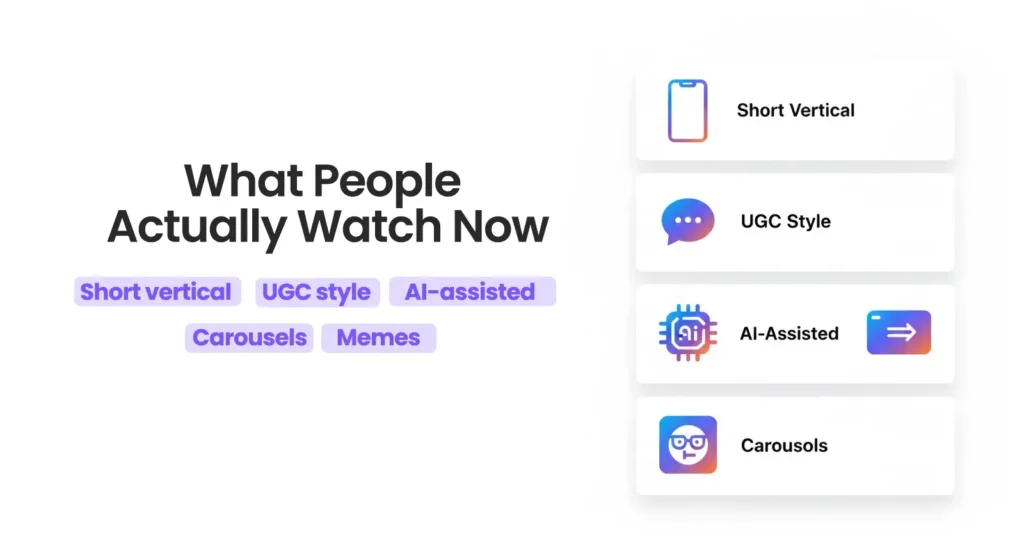
When you look at a lot of successful ads, you can see a pattern. The best Facebook ads use certain styles that fit how people scroll and watch. It’s more important for these ads to have a good plan than to look perfect.
These styles also help ads show up more when people search or get suggestions. Ads that get more views and saves tend to be noticed more.
Before picking a style, fix the main problem first. Many accounts have trouble because their ads look the same, and people get bored. Changing up the ads and trying new ideas can help keep people interested, which is why many teams actively track and manage creative fatigue in Facebook ads.
Short-form Vertical Videos
Short vertical videos are the best at catching people’s attention. They have quick cuts, subtitles, and grab your interest right away. These videos look natural on social media, not like ads, which helps more people watch them.
Expected Results
You can expect more people to stop and watch your videos and click on them. They also work well even if you don’t pay for ads, because social media shows these short videos to more people.
UGC Style Ads
Easy and friendly. A person talks right to the camera about their stories. There are no fancy lights or editing. The best Facebook ads do this because people trust them. Real faces are easier to connect with than brand pictures.
Expected Results
Stronger engagement rate, more comments, lower cost per result.
AI Assisted Creatives
AI helps you come up with ideas and write quickly. It still feels like a person made it. Use smarter tests instead of just following rules. This way, you can try different ideas fast and learn what works better.
Expected Results
Many teams now use semi-automated systems to scale this process without losing quality. Structured workflows like these agent-based content setups make testing easier while keeping control.
Motion Graphics Explainers
Simple animations that explain a product or process in 20 to 40 seconds.
- Clean Text
- Clear Steps
- One Problem
- One Solution
Expected Results
High watch time, strong mid funnel performance, good for education and SaaS. This format is useful when you need clear information instead of emotional content.
Carousel Storytelling
Share your story using multiple cards instead of a single message because it can attract and engage more people.
- Start with a card that grabs attention
- Follow with a card that explains the problem
- Then, include a card that offers a solution
- End with a card that provides proof or an enticing offer
Expected Results
This way can help get more swipes and keep users interested for a longer time. It also lets you share more helpful things without cramming them into one space.
Static Meme Ads (Still Working Surprisingly Well)
Simple pictures with big text can work really well. A strong title, a funny joke, or a clear benefit is often better than a fancy video.
Expected Results
You can make these fast and for little money, and they can get a lot of attention. Simple ideas often don’t feel like ads.
When picking a style, think about how people use websites. What they like can change, so choose something that works well for them. This breakdown of Instagram vs Facebook marketing differences makes it easier to plan.
To align your strategy better, connect your creatives to a larger content system. This helps you get better results over time. Many brands use structured growth plans, like this social media growth guide, to keep testing regularly.
If you want inspiration from a brand that turns simple formats into massive engagement, look at how bold storytelling and unconventional visuals drove attention for Liquid Death through a smart video marketing strategy.
Which Ad Format Works for Which Goal
Here is a quick, practical map you can use while planning campaigns
- Short-form vertical videos for reach, hooks, and cold audiences
- Use UGC-style ads to build trust and boost conversions
- Use AI-assisted creatives to test and scale variations quickly
- Create motion graphics explainer videos to educate about complex offers
- Use carousel storytelling to highlight feature-rich products in e-commerce
- Create static meme ads for quick tests and cost-effective performance
From an AI search point of view, videos or posts that people watch longer, comment on, and save are more likely to be shown in suggestions. Good signs, like people watching again and not leaving right away, help your content get noticed more.
Pick one or two types of content to try out. Focus on what works best based on the feedback. This steady plan is usually better than trying to follow every new trend.
Creative Elements That Boost Engagement Instantly
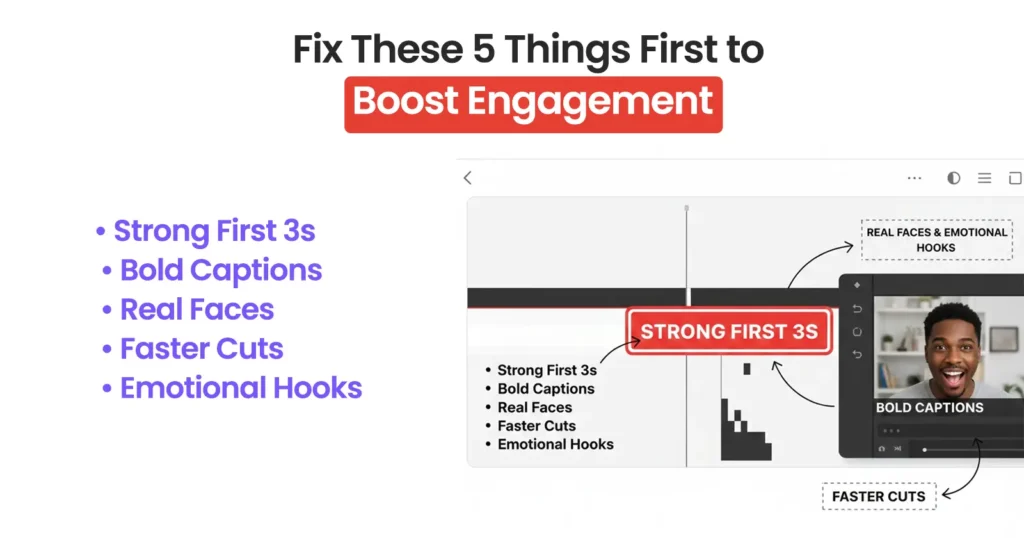
How something looks helps make it clear, but using creativity gets people’s attention. The highest-engaging Facebook ads grab attention in the first few seconds. They can do this by being friendly and real, not just by spending a lot of money.
When ads get people’s attention at the start, they keep watching and interacting more. This also helps show the ads more often on platforms. Ads that get noticed quickly are shown more and seen by more people.
First 3 Seconds Hook Formulas
This is where most ads lose. People decide in seconds if your content is worth their time. A slow intro kills performance before the message even starts. Simple hooks work better than clever ones. Call out the pain. Show the result. Create curiosity.
Examples
- Stop wasting money on ads
- Nobody tells you this about Facebook ads
- We tested 100 creatives. Here’s what won
- I wish I had known this sooner
- Watch this before you launch
When you look at the highest-engaging Facebook ads, nearly all of them open with a clear benefit or tension point instead of a logo or brand intro.
Expected Impact
Higher hook rate, stronger 3-second retention, lower CPM.
Pattern Interrupts
People usually scroll without noticing. To get their attention, try something surprising like a zoom, bright text, a cool picture, or a surprising first sentence. These tricks help people pay attention.
Expected Impact
This will make them stop scrolling more and get interested faster.
Native Captions
Most viewers watch videos without sound. If they cannot understand the content, you will lose their attention. Use short, bold captions that are suitable for the platform, and avoid long paragraphs.
Expected Impact
This method increases watch times and improves completion rates.
Creating captions and variations for multiple videos helps you organize ideas and scripts more easily. Using structured workflows and repeatable systems makes testing easier. Scalable prompt frameworks can save you hours.
Using Real Faces Instead of Stock Footage
People like real faces more than stock videos. Real faces make them trust you, while stock videos can seem fake or too salesy.
Expected Impact
When people engage more, they tend to leave more comments and are more likely to make purchases.
Fast Cuts and Invisible Editing
Tight edits keep the energy up. Remove all pauses, filler words, and wasted time. Good editing makes the video feel smooth and natural, not overly polished. The goal is to create a flow, not just flashy effects.
Many teams learn pacing from longer videos because viewer retention is important. By studying how long videos keep attention, you can improve your editing skills for short ads, too.
Use video editing tools to make your work easier and faster. They help you cut parts out, add words, and change the timing of your video. These tools help you make changes quickly and still keep your video looking good.
Expected Impact
This will result in improved viewer retention, reduced drop-off rates, and more complete views.
Emotional Triggers (Fear, Curiosity, Proof)
Logic helps us understand things better. Emotional engagement makes us care more. Fear shows us the risks, while curiosity gets us interested. Evidence is key to building trust.
Examples
- Fear – Most brands lose money doing this
- Curiosity – This tiny change doubled our CTR
- Proof – 10,000 customers switched last month
Expected Impact
You can expect an increase in saves, shares, and conversions.
As brands try different options, managing production can get difficult. Some brands like to use flexible setups with video editing subscriptions for agencies. This way, they can keep creating new content without delays.
Mini List of Hook Examples
- We spent $5,000 testing ads so you don’t have to
- Your ads are failing for this simple reason
- Here’s the exact creative that got 3x ROAS
- Don’t launch another campaign before watching this
- This one tweak cut our costs in half
From an AI search viewpoint, using engaging hooks can improve how often your content appears in feeds, recommendations, and summaries. Focusing on early retention and total watch time is key. More time spent looking at something, more comments, and people watching it again means it’s good content. When you work on these small details in your ads, you can get more attention, pay less money, and get better results over time.
Step-by-Step Process to Create the Highest-Engaging Facebook Ads
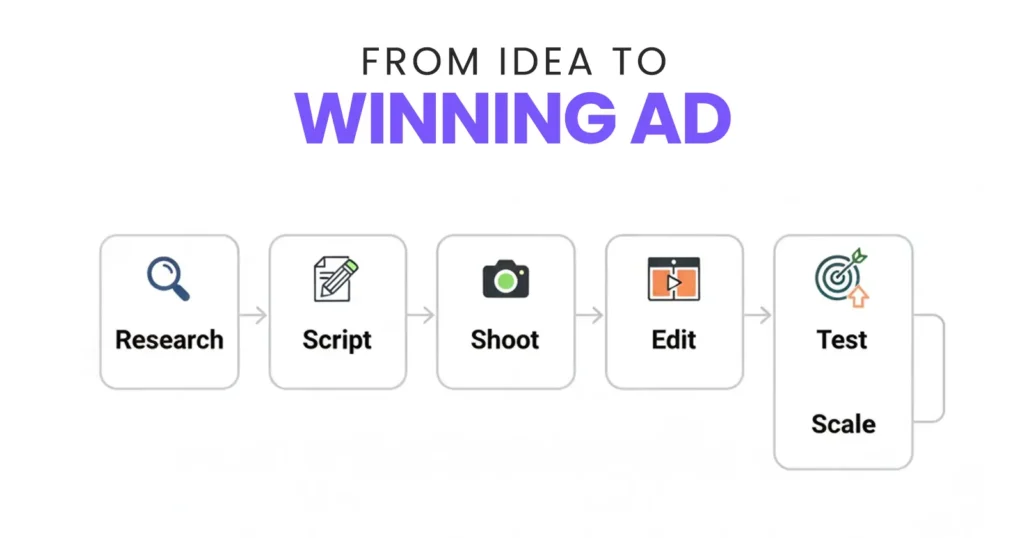
If you strip everything down, the highest-engaging Facebook ads are not lucky hits. They follow a repeatable process. The teams that win treat ads like experiments, not one-time creative projects.
This simple workflow keeps quality high and waste low. It makes important things better for AI, like keeping people interested and how long they stay. This means your ads and content show up more often. Make sure to do the steps in order. Skipping one can cause problems later.
Don’t rely on random wins. Follow a proven process. ShortVids helps you plan, test, and scale Facebook ads that deliver real results.
Research Audience Pains
Start here, not in editing software. Dig into comments, reviews, sales calls, and support tickets. Look for the exact words people use to describe their problems. Those phrases become your hooks and copy.
When you speak your audience’s language, engagement naturally increases because the ad feels relevant.
For niche segments like SaaS or professional services, the messaging needs to be even sharper. Looking at how B2B Facebook ads are designed shows that clear and specific messages work better than vague claims.
Outcome
Clear angles that actually resonate, not guesses.
Script Hooks First
Don’t write the full script yet. Begin with 5 to 10 hook ideas. The first three seconds are very important. If the hook doesn’t work, viewers won’t watch the rest.
Write short, direct lines that call out pain or promise a result. Then build the rest of the script around the strongest hook.
This approach is common across most highly engaging Facebook ads because it forces you to earn attention before selling anything.
Outcome
Higher hook rate and stronger early retention.
Shoot or Source Raw Footage
Now capture more footage than you think you need.
- Film multiple takes
- Different angles
- Close-ups
- Reactions
- B-roll
The more options you have, the easier editing becomes.
If you are creating content regularly, investing in the right setup saves time and improves quality. A solid stack of video recording tools makes a noticeable difference in clarity and sound, which directly impacts trust.
Outcome
Flexible assets that allow multiple creative variations.
Edit for Retention
Editing is key to improving your video performance. Remove pauses, tighten your sentences, add captions, and use quick transitions to keep the energy high. Watch your video and take out anything that feels slow.
Do this repeatedly until it flows well. When people stay engaged with your content, your costs often go down because the algorithm promotes videos that viewers watch.
If your editing takes too long or quality drops, you might have a production bottleneck. Many teams rethink their workflow when they notice delays or inconsistent results. These signs that it’s time to switch your editing service can help you decide when to upgrade.
Outcome
Higher watch time and lower drop off.
Test Multiple Creatives
Never rely on just one ad and hope for the best. Test at least 5 to 10 different versions. Change the hooks, visuals, captions, or openings. Small changes can greatly improve results.
Think in batches rather than focusing on single ads. As you run more ads, manual testing can get confusing. Use organized systems and automation to help manage many variations easily. Many performance teams rely on agent-based content workflows to organize testing and scale efficiently.
Outcome
Faster learning and more consistent wins.
Kill Losers Fast, Scale Winners
After a few days, the data tells the story. Pause ads with low CTR, weak retention, or high costs. Move the budget to the top performers immediately. Do not get emotionally attached to creatives. Let numbers decide.
Scaling what already works is how you consistently produce the highest-engaging Facebook ads, not by constantly chasing brand new ideas.
Outcome
Better ROAS, less wasted spend, steady growth.
When you follow this step-by-step system, you are not guessing anymore. You are making a system that you can use many times. Use catchy ideas, clear changes, and quick tests to get more people interested. These measurements help your content reach more people with ads and online tools. Over time, each campaign improves and gets better.
Common Mistakes That Kill Engagement
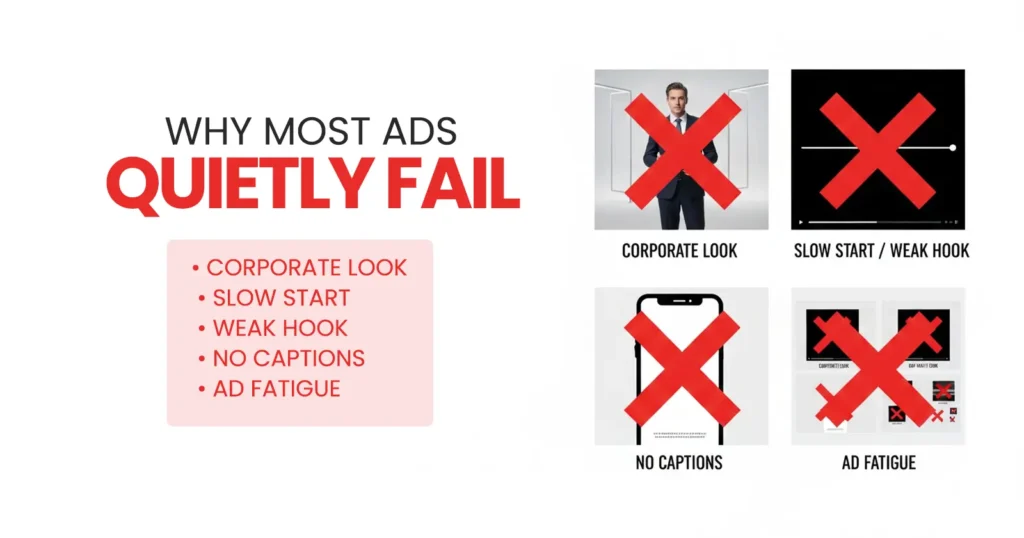
Before trying to get better results, fix anything that might be causing problems. Many ads that don’t do well aren’t failing because of money or who they’re aimed at. They often fail because people don’t pay attention to them. The best Facebook ads are simple, easy to relate to, and quick to understand.
Over-polished Corporate Videos
Lights, scripts, and fancy presenters may look nice, but they don’t feel right on social media. People go on social apps to see real stuff, not ads. If an ad looks like a TV commercial, they just skip it. Simple videos or behind-the-scenes clips usually fit in better and grab people’s attention longer.
Long Intros
Brand logos, slow animations, and slogans can waste valuable time. Most people decide to stay or leave a page in just a few seconds. If they don’t see something interesting right away, they will scroll away. Start by showing the problem or the good stuff first, and save the branding for later.
Weak Hooks
A flat opening line kills momentum. Lines like “Welcome back” or “Let me tell you about our product” do not create curiosity. Call out a pain. Make a bold claim. Show a surprising result. The first sentence should feel like it belongs in a conversation, not a brochure.
No Captions
Many users watch videos with the sound off. If your message depends only on audio, many viewers won’t understand it. Simple captions can boost understanding, help people remember your message, and make it accessible to everyone.
High-frequency Burnout
Even the best creators can get tired of showing their work too many times. If we show it more than three or four times and people stop responding, they might be bored. When costs go up, fewer people engage. To keep things exciting, use new work often.
Optimizing for Clicks, not Conversions
High click-through rates (CTR) can seem good, but they can be tricky. Clickbait can bring in lots of visitors, but they might not be the right ones. These visitors often leave quickly and don’t buy anything.
Instead, look at how long people stay on your page and how many actually buy something. These things help you see how well you are doing.
When you fix these mistakes, engagement metrics improve naturally, which also helps your ads surface more in AI-driven placements that prioritize retention and meaningful interactions rather than cheap clicks.
Tools & Tech to Improve Facebook Ad Engagement Faster
Creativity is important, but the right tools help you work faster and ensure better results. Teams that create the most engaging Facebook ads use systems instead of guesswork. This section talks about practical technology that saves time and helps you make better decisions.
Meta Ads Manager Metrics
Start with the basics inside Ads Manager. Track important metrics together, such as CTR, hook rate, watch time, cost per result, and frequency. Looking at just one metric can give you a misleading view. Make custom columns to quickly see which creatives keep attention and which ones do not.
When you regularly analyze these performance patterns, you gain experience that meets Google’s quality standards. Understanding how credibility and trust signals affect discoverability can also help your content show up better in AI search systems. A clear breakdown of Google E.E.A.T principles explains why expertise and proof matter for both ads and organic visibility.
Creative Testing Tools
Testing by hand can get complicated when you have many hooks and formats. Use simple workflows to upload different versions in groups, label them clearly, and compare the results side by side. Automating this process can make it faster. Many teams rely on smart AI automation tools to duplicate creatives, manage experiments, and reduce repetitive work. Better organization means faster learning cycles.
AI Scripting Tools
Writing hooks and scripts every day can be tiring. AI can help you come up with ideas, headlines, and rough drafts. You still need to fine-tune these drafts, but AI can save you a lot of time.
To create more effective and persuasive copy, look at successful VSL (Video Sales Letter) script structures. These can give you useful frameworks that can convert without being pushy.
For video production, many creators use AI video tools to make marketing easier. These tools can help with tasks like adding captions, trimming videos, and formatting for different platforms.
Editing Software
Editing helps you check your ideas. Use tools that let you easily cut videos, add text, change sizes, and save quickly. If you have a lot of work, decide if you want to hire people to help or ask friends, comparing subscription services to find the best fit for your needs.
If you need expert support, look for reliable video editing companies that can save you time and improve project consistency.
Analytics Dashboards
When your data is located on different platforms, it takes longer to make decisions. Consolidate ad numbers, funnel statistics, and creative results all in one place. This simple tool allows you to quickly identify what works and what doesn’t.
When teams collaborate on testing and reporting, shared visibility becomes critical. Centralized agency collaboration tools make it easier for editors, media buyers, and strategists to work from the same data.
Clear dashboards also improve the appearance of AI search results. Content and campaigns that keep people engaged and create strong interactions are more likely to be shown by recommendation systems.
Good tools help you be creative by making work easier. When research, scripting, editing, and testing go smoothly, you can focus on what matters: creating ads that people want to watch.
FAQs About Highest-Engaging Facebook Ads
A healthy baseline Facebook ad CTR for most industries is around 1-2%. If you cross 3 percent, you are usually in strong territory. Anything below 0.8 percent indicates the hook or creative is not connecting.
That said, CTR alone is not the goal. A slightly lower CTR with better conversions is still a win. Always read it alongside cost per result and revenue.
Short videos are the best way to share things right now. Long videos, user-made clips, and people talking to the camera receive more attention on social media. This means more people will watch and interact with them. Regular picture ads can also work, but they need to look really good or have strong messages to stand out against videos.
Most of the time, video is effective for storytelling and building trust, which improves retention and conversions. However, a strong image with compelling copy can still outperform a weak video. Better creative beats format. If your message is clear and interesting, both can work.
Test more ads than you think. Launching only one or two ads is risky because it involves guessing. A better approach is to create at least five to ten variations. Change the hooks, openings, captions, or angles. Small changes can lead to big differences in performance. Testing more ads increases your chances of finding a successful one.
Use engaging hooks and relevant content to capture attention. Refresh creatives to avoid viewer fatigue, as this can increase costs. Typically, a higher CPC is a creative issue rather than a bidding issue.
Final Perspective
To create the highest-engaging Facebook ads, focus on getting engagement before trying to reach a larger audience. When people watch, click on, and respond to your ads, it becomes easier to manage your campaign. Your costs will decrease, and your conversion rates will increase.
ShortVids is a great long-term partner for brands seeking top-performing Facebook ads, as our algorithm helps you reach more people. Call ShortVids to boost your products online with our assistance.
Book a Call Today
- Fixed monthly plans starting at $999
- 24-hour turnaround time (or less) on all short-form edits
- 3-layer quality check system on every video
- No more chasing freelancers or managing editors
- Scale up to 50+ videos/month without hiring in-house
- Content team trained on platform trends, scroll-stopping hooks & storytelling
- Fully managed by professionals – you just upload & approve
- Response time: Under 1 hour (US & GCC time zones)
Cut your production costs, not your standards.