
Quick Summary
TL;DR: Facebook CTR Benchmarks show that better creative, faster testing, and smart automation drive more clicks than targeting tweaks or bigger budgets. Teams that refresh ads regularly and treat campaigns like experiments consistently lower costs and scale faster. #tldr
- Main Takeaway:
Creative quality and consistent testing improve CTR more than targeting changes alone.
- Improving CTR Performance:
Research audience signals → Produce multiple creatives → Test variations weekly → Kill underperformers → Scale winners → Refresh before fatigue
- Impact:
Higher engagement, lower CPC, better ROAS, and more stable month to month growth without increasing ad spend
Stop wasting spend and start scaling winning ads!
Facebook Click-Through Rate (CTR) benchmarks show how effective your ads are. The CTR is the percentage of people who click your ad after seeing it. Even if this percentage seems small, it can greatly affect your costs and results. Many teams start by improving their messaging and ideas using proven Facebook ad strategies for businesses.
When CTR improves, your Cost Per Click (CPC) usually drops, and your Cost Per Mille (CPM) becomes more efficient because Meta’s system sees your ad as relevant. When CTR is weak, the platform assumes people are not interested, and you end up paying more for the same traffic. That is why creative quality matters more than budget.
Industry data backs this up. WordStream reports that Facebook ads usually get clicked by about 1 out of every 100 to 2 out of every 100 people. When ads get more clicks, it costs less to get new customers and helps make more money. Some formats of Facebook ads are better at getting clicks and keeping people interested.
Those same behaviors now influence AI search visibility too. Higher dwell time, better engagement rate, and longer watch time signal usefulness to both ad platforms and AI systems that summarize or recommend content.
Average Facebook CTR Benchmarks Across All Industries (2026 Data)
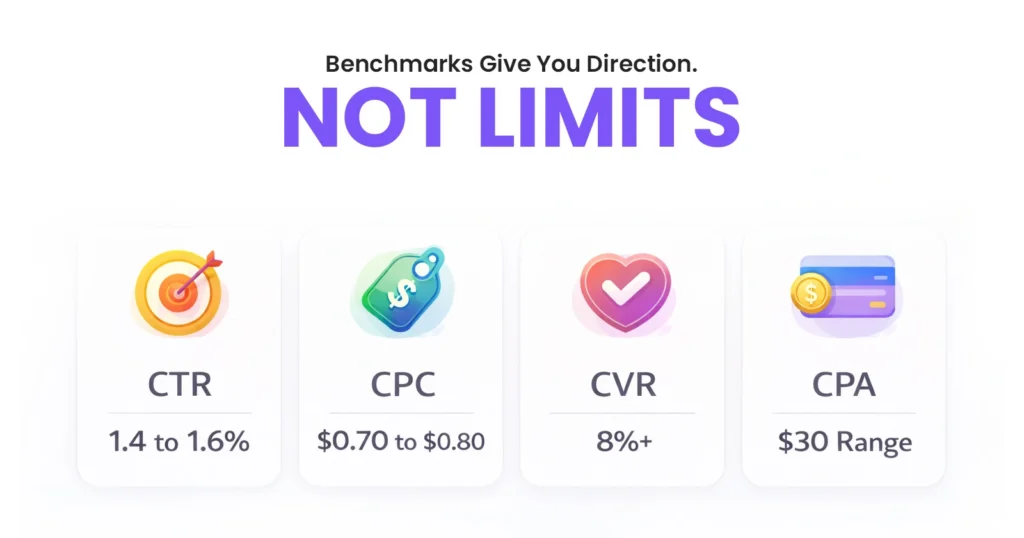
To effectively evaluate your performance, you need a clear starting point. The Facebook CTR benchmarks are based on recent industry reports, average figures from 2025, and realistic projections for 2026. These projections account for increased competition, improved creative testing, and Meta’s AI optimization. They give you practical targets to aim for before you increase your budget.
| Metric | 2025 Avg | 2026 Projected | Change |
|---|---|---|---|
| CTR | 1.57% | 1.45% | -7.60% |
| CPC | $0.70 | $0.78 | 11.40% |
| CVR | 7.72% | 8.20% | 6.20% |
| CPA | $27.66 | $30.00 | 8.50% |
These numbers align with benchmark data from WordStream and similar performance studies of conversion-focused campaigns. As more advertisers enter the auction, clicks cost slightly more. Better targeting and AI-driven bidding improve the quality of conversions. This is why the conversion rate (CVR) often goes up even when the cost per click (CPC) increases. So, what is a “good” CTR?
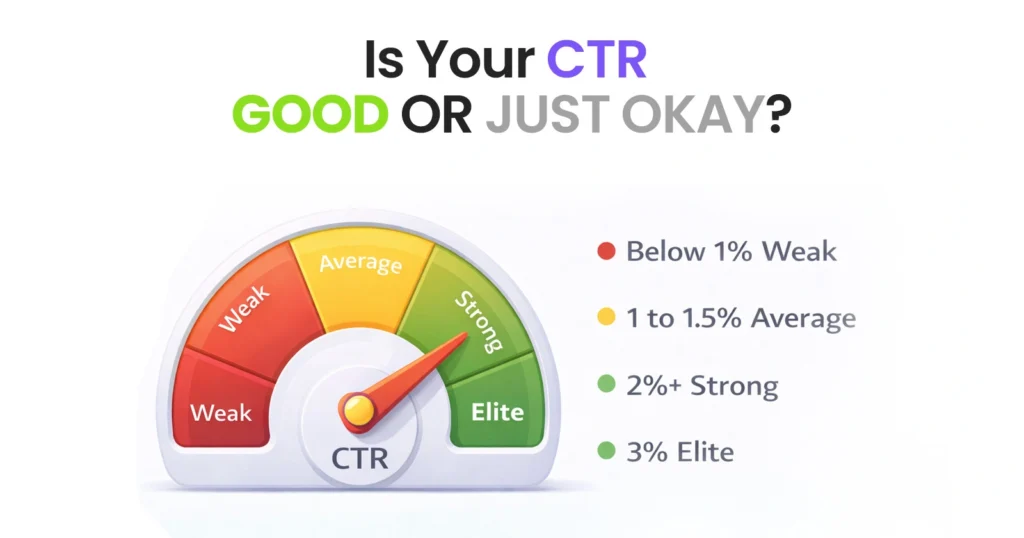
- A CTR below 1% indicates weak performance, meaning your ad is receiving views but failing to capture interest.
- A CTR between 1% and 1.5% is considered average and aligns with most industry standards.
- A CTR ranging from 1.5% to 2.5% is strong, suggesting that your targeting and creativity are effective.
- A CTR of 3% or higher puts you in the top performer category, where costs tend to drop, making it easier to scale.
How to Read These Facebook CTR Benchmarks for Your Account
Think of these ranges as guidelines instead of strict rules. For example, a local service brand might consider a CTR of 1.4% acceptable. E-commerce or impulse offers can reach a click-through rate of 2% to 3% when they use strong hooks and visuals. It is important to focus on consistent improvement rather than aiming for random numbers.
A higher CTR shows Meta that people engage with the ad. This can lead to lower click costs, reduced costs per thousand impressions (CPM), and greater visibility. A low CTR has the opposite effect and makes the algorithm limit your reach.
This behavior is linked to broader changes on the platform. Engagement signals, like watch time, scroll depth, and saves, now play a big role in both ad delivery and AI-driven discovery systems. Teams that track social media growth trends tend to spot these changes earlier and adjust creative direction faster.
Measurement is as important as creativity. By breaking down campaigns into audience, placement, and hook angle, you can see clear patterns. This helps you spend your budget more effectively and reduces waste. A simple process for analyzing Facebook ad data helps you see which ads truly drive clicks and conversions, instead of guessing.
There is also an AI search layer to think about. When people pay attention to your ads and content for a long time, it makes them more likely to engage and watch. This helps your brand get noticed more often. A high click rate shows that people are really interested, which helps your ads show up better in searches.
When you use these benchmarks as a reference point, decisions become easier. You know when to fix creative, when to adjust targeting, and when to scale what is already working.
Discover what’s holding your ad performance back!
Facebook CTR Benchmarks by Industry (2026 Predictions)
Click-through engagement varies by niche and audience behavior. These Facebook CTR benchmarks show actual performance data from 2025 and trends expected for 2026. The benchmarks are based on ad formats, user intent, and how effective the creative content is. Most of these figures come from broad datasets measuring traffic-objective campaigns, where CTR is core to performance.
How Facebook Ad Performance Varies Across Industries
Side-by-Side Facebook CTR Benchmarks by Sector
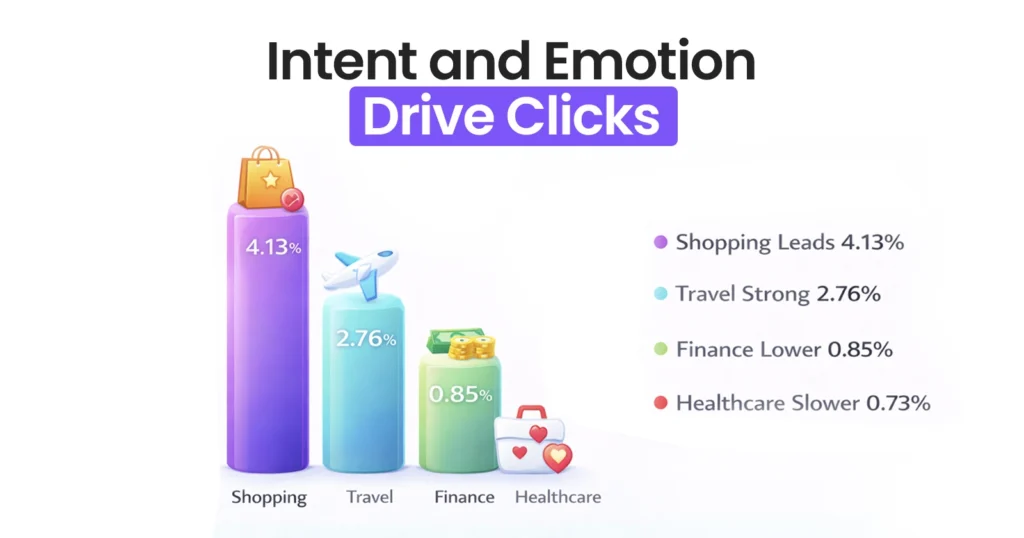
Retail and visually driven niches tend to lead because products with emotional or aspirational appeal grab attention in the feed more easily. Categories like Shopping, Collectibles & Gifts, Travel, and Sports & Recreation get higher engagement rates. People scroll through these categories and are more likely to click on content that visually attracts them.
On the other hand, industries like Finance & Insurance and Healthcare have lower click-through rates. Users in these areas need more time to think before clicking on offers. However, ads in these sectors can perform better when they use strong social proof, storytelling, and engaging videos that spark curiosity.
The type of creative format used also affects CTR. Short vertical videos and dynamic placements usually work better than static images because movement captures attention. Comparing short vertical clips to static ads can show how much format influences engagement. These trends are similar to why certain campaigns, like guerrilla or unconventional branding stunts, can dramatically shift engagement even in harder-to-engage categories.
In some cases, bold creative approaches – especially in entertainment or lifestyle categories – outperform generic corporate imagery. Looking at how unexpected, high-impact videos (such as the unconventional storytelling behind certain viral campaigns) reshape engagement can give you fresh ideas on how to structure and test your creatives.
What Counts as a Good CTR for Different Campaign Types
A good click-through rate can be different depending on what you want to achieve. If you want more people to visit your site, you look for clicks. If you want people to sign up or take action, that’s your goal. But if you’re selling things, you want people to buy. Retargeting campaigns engage users who have already interacted with your brand, leading to higher engagement.
When you understand these differences, you can set realistic targets instead of comparing unrelated metrics. This clarity helps Meta’s system optimize your ads faster, as higher engagement signals to the algorithm that your ad should get more delivery. If you want to study proven creative patterns that consistently lift interaction rates, you can explore these practical Facebook video ad creative formulas. And since performance shifts with every platform change, keeping up with recent Facebook algorithm updates helps you adjust benchmarks before results drop.
Traffic Campaigns
Traffic campaigns bring cold audiences to your site or landing page. Because the goal is simply the click, CTR is the main success signal here, and this is where Facebook CTR benchmarks matter most.
A realistic range sits around 1.2% to 2% for most industries. Strong creatives with clear hooks and native visuals can push 2.5 percent or higher. If you are below 1 percent, your hook or targeting likely needs work.
Expect higher CTR and lower conversion rate. That tradeoff is normal for top-of-funnel traffic.
Lead Generation
Lead generation ads require users to put in more effort. Filling out a form or sharing personal information shows commitment. Because of this extra effort, the click-through rate is usually lower than in traffic campaigns.
A good CTR range is between 0.9% and 1.6%. If your CTR is above 2%, it indicates that your offer and message connect well with your audience’s needs.
Focus on the cost per qualified lead rather than just the number of clicks. A high CTR with low-quality leads is not helpful.
E-commerce
E-commerce sits in the middle. People need intent to browse products, but the action is still lighter than filling out a form.
Most stores get 1% to 1.8% of visitors to buy something. You can get more than 2% by showing good pictures, doing product demos, and using short videos. It helps to have clear prices and customer reviews.
If a lot of people click your ad but don’t buy anything, look at your product page or checkout. That’s probably where the issue is.
Retargeting
Retargeting is about reaching people who already know your brand. These are people who have been to your website, watched your videos, or put things in their cart. Because they trust you, they are more likely to engage with your ads.
If fewer people click on your ads, it might mean they are no longer interested. You can fix this by changing the pictures or offers in your ads.
It’s important to have different goals for each type of ad. Look at how each ad performs based on its own goal rather than comparing it to other ads. This helps you understand what works and improve over time.
Factors That Directly Improve Facebook CTR
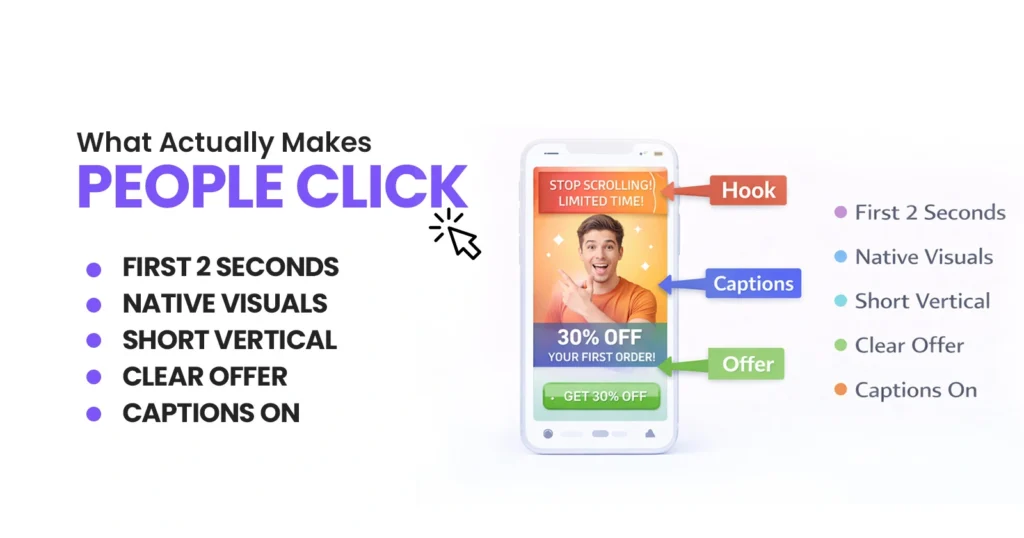
When you want to get more clicks on your Facebook ads, understanding what drives attention is key. Improving Facebook CTR benchmark doesn’t happen by chance, but it is about how your content grabs eyes, keeps them interested, and motivates action.
Strong Hooks in the First 2 Seconds
The first two seconds of a video decide if someone keeps watching. A sharp visual or unexpected motion can make users pause their scroll. You can combine this with creative testing to quickly identify which openings stop people in their tracks. For bigger campaigns, consider strategies from high-budget Facebook ad strategies to see what types of hooks perform best at scale.
Native Looking Creatives
Ads that blend into the feed naturally get more clicks. Avoid heavy branding at the start; instead, use visuals that feel like content your audience is already consuming. For example, when running campaigns, analyzing metrics can prevent wasted spend, learn how to avoid ROI traps in Facebook ads, and fix ROI traps.
Short Vertical Videos
Vertical videos grab attention on mobile and are easier to digest quickly. Short-form videos let you try out different hooks and captions without overwhelming the viewer. Using AI tools for quick edits can help scale these videos efficiently while maintaining high quality.
Key Workflow Elements to Boost Performance
- Creative testing
- Editing
- AI tools
- Video workflows
Clear Offer
Users respond when they know what’s in it for them. Show your offer right away, in the first few seconds. This could be a discount, a free guide, or a demo. Use words or pictures to help people understand, even if they can’t hear you.
Frequency Control
Seeing your ad too often can cause people to ignore it. To keep your audience engaged, manage how often they see your ads. Testing different versions of your creative and video content can help lengthen the life of your campaigns while keeping the click-through rate healthy.
Caption Overlays
Adding captions makes sure your message gets across even when users watch without sound. Use captions to highlight important points or offers and strengthen your main message. Editing tools and AI can speed up this process, letting your team experiment with multiple versions quickly.
How Creative Quality Affects CTR More Than Targeting
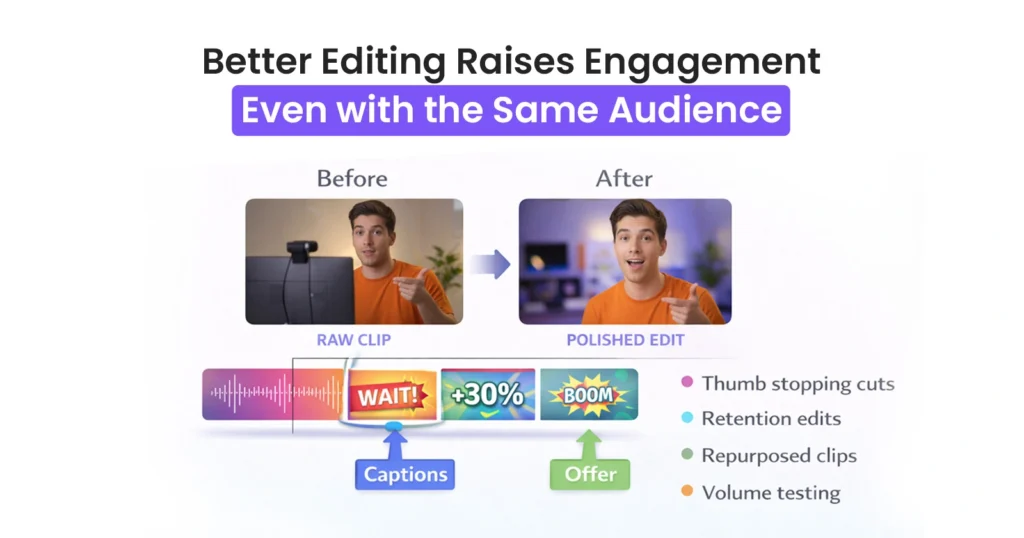
Clicks -depend heavily on how your creative performs. The way a video is edited, cut, and presented can lift your Facebook CTR benchmarks more than precise targeting alone.
Thumb-stopping Edits
A few quick visual changes can decide whether someone pauses to watch. Attention-grabbing frames, motion, and pacing make a difference. Teams using professional video editing services can create these edits in ways that feel natural and engaging, not forced.
Retention-based Cuts
Keeping viewers engaged after the first few seconds is more important than how many impressions you get. Making cuts that spark curiosity or maintain the flow of the story helps viewers watch for longer. AI-assisted automation workflows can speed up testing different cuts, so you know what holds attention best.
Repurposed Content
Using existing long-form videos in fresh ways can feed your ad pipeline without starting from scratch. Repurposed clips using the top repurposing tools can give you more variations to test for clicks and engagement.
Volume Testing
Make different versions of your videos to find the best ones. Testing many ideas at once shows you which clips are favorites. Use editing tools to make your videos better and faster.
Step-by-Step Process to Improve CTR Every Month
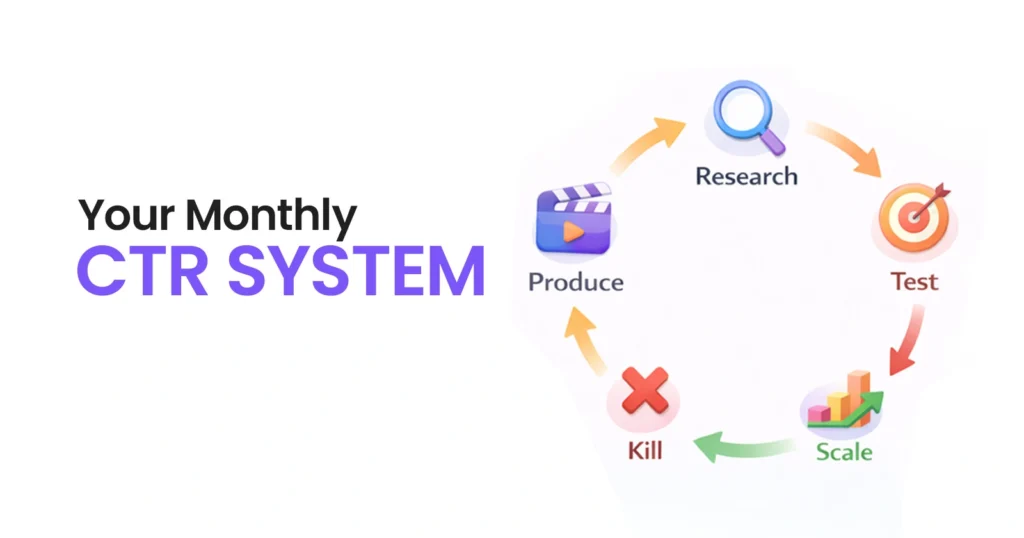
Improving Facebook CTR benchmark is a continuous process. Following a clear workflow each month helps you spot what works, what doesn’t, and where to double down. According to Social Media Today, brands that test and refresh their creatives monthly see an average CTR increase of 14% compared to campaigns without regular updates.
Research → Produce → Test → Kill → Scale → Refresh
Research
Start by analyzing past campaigns and understanding which stories and visuals captured attention. Strong storytelling is key, and using techniques from video storytelling and how to use them can guide your creative direction.
Produce
Create multiple variations of ads with different hooks, edits, and formats. Maintaining fresh content helps avoid creative fatigue, which Facebook reports can decrease ad engagement by up to 20% if creatives are not rotated. Learn more about identifying fatigue in Facebook ads.
Test
Try running small tests to find out which cuts, hooks, or repurposed clips get the most clicks. Use volume testing and edits based on viewer retention to identify the most engaging versions.
Kill
Stop running ads that do not perform well. Remove these low-performing ads quickly so you can focus your budget on what works.
Scale
Focus on the best-performing ads. Use different formats, captions, and audience groups to increase reach while keeping your click-through rate high.
Refresh
Regularly update your content with new edits, engaging hooks, and repurposed material. Small changes, like adding captions or adjusting the timing, can help keep your audience’s attention and boost clicks.
AI + Automation Trends Affecting Facebook CTR Benchmarks
AI and automation are shifting how advertisers think about performance. These trends not only influence how campaigns are managed, but they also shape what benchmarks for Facebook CTR look like in 2026. Data from recent reporting shows wide adoption of automated tools and measurable boosts in efficiency and results.
| Trend | Impact |
|---|---|
| Advantage+ adoption | 82% of Facebook advertisers use Advantage+ automation for campaign management |
| AI bidding improves ROAS | Campaigns with AI bidding show 27% higher ROAS compared to manual campaigns |
| Creative automation | Creative automation tools let brands produce 45% more ad variations |
| Predictive optimization | Meta’s predictive analytics suggests campaign adjustments every 72 hours |
Advantage+ Adoption
Many advertisers like to use Facebook’s tools because they make setting up ads easy. The tools help control where the ads show, how much to pay, and how they look based on how well they are doing, all without needing to change things by hand. For the creative side of things, selecting the right gear makes a difference in output and quality when producing assets, and tools like the best video recording tools help teams capture content that feeds automated workflows naturally.
AI Bidding Improves ROAS
Automated bidding strategies aren’t just convenient. Data shows that campaigns using AI bidding do better and are more efficient. These systems look at data quickly and change bids right away. This can help get more money back for each dollar spent. A smart AI bidding plan can help save money and make it more likely that clicks turn into sales. Pairing this with structured AI automation tools in your production and testing cycle helps ensure assets are ready for frequent iterations and refinements.
Creative Automation Stats
Using tools and scripts can help teams make many different choices instead of doing it by hand. Having more choices lets us try new things and learn what people like. Marketers using creative automation see a significant jump in the number of ad variations produced in the same time frame, giving more opportunities to learn what drives CTR and engagement.
Predictive Optimization Every 72 Hours
Predictive analytics helps you see how well your campaigns are doing and suggests changes to make them better. It looks at the performance regularly so you can spot problems early. This way, you can update your ads or adjust your spending to keep people interested.
Common CTR Mistakes That Kill Performance
Bad habits in making ads and testing them can lower your Facebook click-through rate, even if you pick the right audience. Here are the common mistakes teams make when establishing Facebook CTR benchmarks, explained in plain terms.
- Slow intros make people scroll right past before they see your point or hook. A sharper opening keeps people watching longer and clicking more.
- Ads that look like stock templates don’t stop feeds. Real, thumb-stopping visuals matter, and that’s exactly the kind of issue addressed in high-budget Facebook ads strategies, where more authentic creative gets attention.
- Weak hooks that don’t set context or tease value fail to earn the click. You need something that grabs interest right away.
- Not having captions means half your viewers might miss the message. Most people scroll with the sound off, so captions are important.
- Testing only a few creative options won’t help you find what works best. You need to try many different approaches to discover winners.
- Focusing only on clicks can backfire if you ignore quality and the experience after people click. You can run into the same ROI traps explained in Facebook ads ROI traps and fixes, where chasing low CPCs without looking at downstream engagement skews results.
Fixing these common mistakes gives you a much better shot at lifting CTR month after month.
Tools to Track and Improve CTR
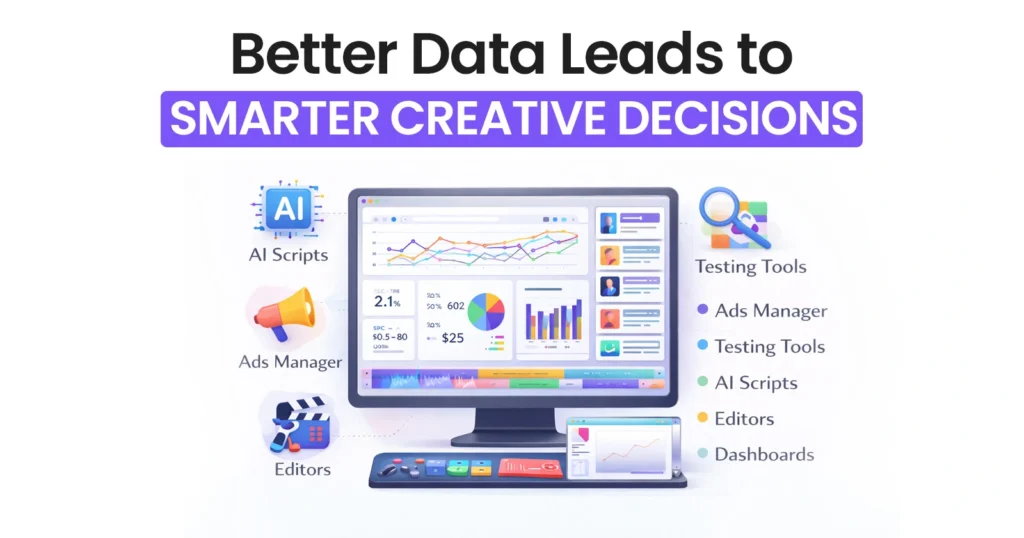
Getting a clear picture of how your ads are performing helps you improve Facebook CTR benchmarks month after month. The right tools make it easier to track performance, test ideas, and optimize creative.
Meta Ads Manager Metrics
Start with Meta’s native dashboard. Ads Manager shows clicks, impressions, CTR, CPC, and more right in the platform where your campaigns run. You can break these down by placement, audience segment, and creative variation. Connecting this with tools like ViewMetrics gives you automated reporting and custom dashboards you can share with your team.
Creative Testing Tools
Testing different versions of ads is important to find out what gets more clicks. Using tools that help you compare variations can show you which creative elements work best.
Consider trying these options
- AdEspresso for split testing and A/B comparisons of headlines, images, and placements
- Bestever for analyzing creatives that score visuals, hooks, and show what boosts engagement
- Superads for real-time creative performance dashboards and AI insights
AI Scripting
Using AI scripts can help you quickly create different versions of ad copy and layouts for testing. This speeds up idea generation without much extra work. AI tools can help you come up with catchy phrases and wording that may improve click rates. They also help keep your messaging in line with current trends and data.
For guidance on balancing creative with platform nuances, a comparison of organic and paid outreach can give you context, such as the differences between Instagram vs Facebook marketing and how audiences respond differently across placements.
Editing Software
Good editing software helps you create a variety of creative options and customize each one for your audience. These tools keep your videos and images fresh and support your testing strategy.
Here are some options
- Use Adobe Premiere Pro or Final Cut for detailed editing.
- Choose Canva and CapCut for quick edits focused on social media.
- Look for tools that simplify the process from raw footage to ad delivery.
Analytics Dashboards
Putting all your performance data in one place helps you spot patterns and trends over time. Dashboards can pull performance from Facebook Ads and other channels to give you a full picture.
Useful dashboards include
- ViewMetrics for automated reporting and cross-metric insights
- Superads for multi-network performance breakdowns
- Custom dashboards built with tools like Supermetrics that bring your Meta Ads data into spreadsheets or business intelligence tools
Looking at your data in context helps you see not just how many clicks you’re getting, but why some creatives beat others.
A natural extension of this kind of tracking is thinking about audience and intent for specific verticals. For example, if you are marketing a SaaS product, combining ad performance metrics with use case insights from Facebook ads for SaaS success can sharpen how you interpret CTR trends.
Frequently Asked Questions About Facebook CTR Benchmarks
Most industries see 0.9% to 1.5% as average. Anything above 2% usually means your creative and hook are doing their job.
It depends on your CPC. If your average cost per click is $0.50, then 1,000 clicks cost about $500. Lower CPCs come from stronger creatives, not just cheaper targeting.
About 20% of your creatives drive 80% of results. Your goal is to find those few winners fast and scale them.
Studies show users are exposed to thousands of ads daily across platforms. Attention is limited, so only thumb-stopping content earns the click.
Creative fatigue is usually the main reason people stop noticing your ad. They have seen it too many times. Refresh your visuals, hooks, and formats every few weeks.
Yes, in most cases. Short vertical videos hold attention longer and explain value faster, which usually leads to higher CTR compared to static images.
Start each campaign with 5 to 10 variations. Having more options helps the algorithm work better and allows you to find the successful variations more quickly.
It’s fine for testing and learning. You won’t scale much, but it’s enough to gather early data and validate which creatives deserve more budget.
Final Thoughts
To make your Facebook ads better, try some easy habits. First, focus on getting people to engage with your ads. Good pictures and videos are more important than just targeting specific groups. Even small changes can help a lot over time, and you should always keep testing what works. Think of each month as a chance to try new ideas.
If you need help making lots of ads quickly, a team like ShortVids can help you create and update your ads without slowing you down.
Book a Call Today
- Fixed monthly plans starting at $999
- 24-hour turnaround time (or less) on all short-form edits
- 3-layer quality check system on every video
- No more chasing freelancers or managing editors
- Scale up to 50+ videos/month without hiring in-house
- Content team trained on platform trends, scroll-stopping hooks & storytelling
- Fully managed by professionals – you just upload & approve
- Response time: Under 1 hour (US & GCC time zones)
Cut your production costs, not your standards.