

Quick Summary
TL;DR: The YouTube AI Channel Removal Policy is the platform’s way of cleaning up low-effort, automated, and recycled content, not punishing creators who use AI responsibly. The channels at risk are the ones mass-producing templated slideshows, copied scripts, and faceless automation with no creativity behind them. #tldr
- Main Takeaway:
AI assistance is allowed, but reused or low-effort content puts your monetization and channel at risk. Stricter checks on automated uploads, duplicate scripts, templated formats, and recycled clips with no transformation.
- What You Should Focus On:
Original commentary, human narration, creative editing, stronger retention, & consistent brand authority.
- Who’s Most at Risk:
Fully automated slideshows → stock footage narration channels → bulk template uploads → copy and paste facts → news content farms.
AI and faceless YouTube channels have grown quickly in the last two to three years. Creators have used text-to-speech tools, stock footage libraries, and simple automation to publish a lot of content. Many of these channels have reached millions or even billions of views in a short time. However, things have changed recently. Some channels have received limited ads, others have lost their monetization overnight, and some have disappeared entirely. This situation concerns the new YouTube AI channel removal policy.
The good news is that it is not a complete ban on AI, but rather a move to encourage originality and provide value to viewers. Video consumption keeps climbing, with more than 90 percent of marketers saying video gives them strong ROI, according to HubSpot.
As the platform grows, YouTube is under pressure to filter out low-effort or recycled content. If you want to build sustainable YouTube traffic, it helps to focus on structure and discoverability first. Many creators follow proven methods like this guide on improving long-form video rankings and smarter approaches to earning from faceless formats.
What Is the YouTube AI Channel Removal Policy?
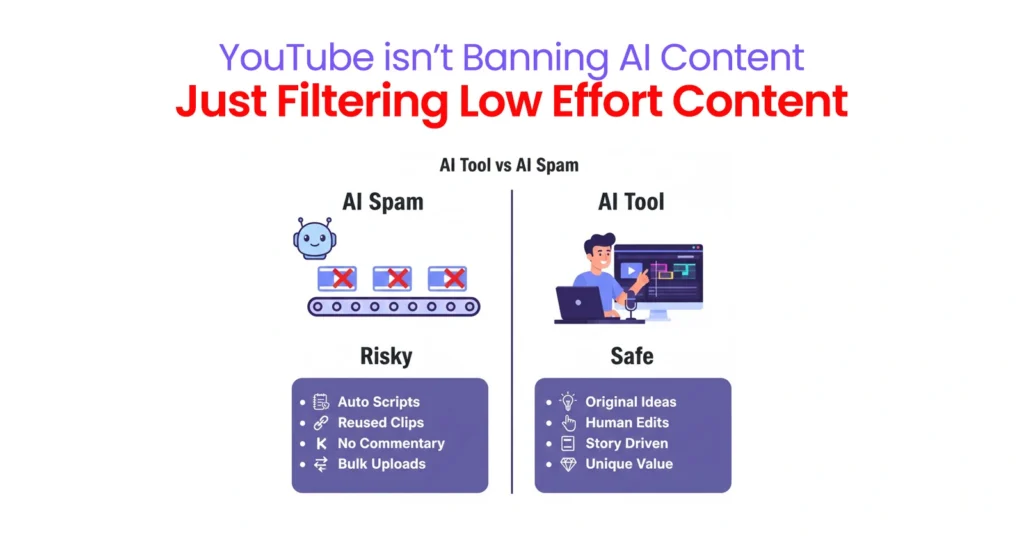
At its core, the YouTube AI channel removal policy is not a rule that targets AI itself. It is a quality filter. YouTube is trying to reduce low-effort, repetitive, and mass-produced content that does not add real value for viewers. A lot of that content happens to be created with AI tools, which is why many creators assume AI is the problem. In reality, the issue is how the tools are used.
If a video looks copied, automated, or made just to trick the algorithm, it might get flagged. However, if you use AI to help with research, speed up editing, or improve production while still adding your own original ideas and personality, you’re usually safe.
Remember, YouTube judges the effort and originality behind your video, not the tools you use.
Is YouTube Actually Banning AI?
The answer is plain: No, YouTube is not banning AI-generated or AI-assisted content. Plenty of successful channels use AI for script drafting, subtitles, voice cleanup, editing help, thumbnails, and even animation. Those are normal creative workflows now.
Problems start when:
- Videos are fully automated with no human input
- The same template is repeated hundreds of times
- Clips are reused with minor changes
- Narration adds no real insight or transformation
So it is not “AI equals removal.” It is “low value equals risk.”
Policy vs Misconceptions
There’s a lot of fear around this topic, mostly because people hear about demonetized channels and assume YouTube is cracking down on all faceless or AI content.
Here’s where the confusion usually happens.
Many creators think:
- An AI voice means instant ban
- Faceless channels are unsafe
- Automation is not allowed at all
But YouTube actually looks at viewer experience first. If viewers find the content useful and engaging, the channel usually does well. But if they leave quickly or see the same content repeated too often, the system treats it like spam.
The policy is more about quality signals than technology. Long-term monetization helps to understand how YouTube evaluates performance and revenue eligibility.
Official Guidelines Behind This Update
The YouTube AI channel removal policy is shaped by a few existing rules that have been around for years. They are just being enforced more strictly now.
Reused Content Policy
Content that looks copied, minimally edited, or non-transformative can lose monetization. Think compilations, slideshows, or stock footage with basic voiceovers.
Spam and Automation Policy
Channels that upload in bulk using templates or scripts at scale without originality may be treated like content farms.
Partner Program Monetization Rules
To earn ad revenue, videos must be original, advertiser-friendly, and provide clear value. Low-effort automation struggles to meet these standards.
If you are trying to grow safely, focusing on stronger storytelling, better retention, and smart promotion strategies makes a big difference, and tactics like these proven ways to increase your YouTube views naturally help build that foundation.
Quick Summary: What This Policy Does and Does Not Do
What it does:
- Targets low effort and repetitive videos
- Flags reused or non-transformative content
- Demonetizes spammy automation channels
- Reviews channels more strictly for Partner Program eligibility
What it does not do:
- Ban all AI tools
- Remove every faceless channel
- Penalize creators using AI for editing or research
- Stop original, value-driven videos from monetizing
In short, AI is fine. Shortcuts that hurt quality are not.
Why YouTube Introduced the YouTube AI Channel Removal Policy Now
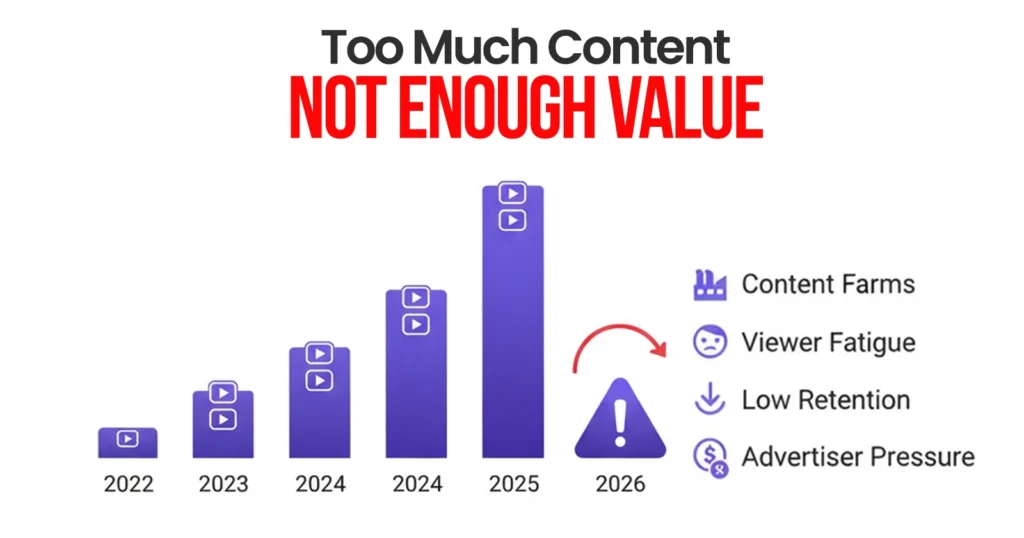
If this policy feels sudden, it’s really not. It has been building for a while. Over the last few years, AI tools made video production faster and cheaper than ever. That’s great for creators who want to work smarter. But it also opened the door for mass-produced, low-effort channels that publish hundreds of near-identical videos every month.
From YouTube’s perspective, that creates a quality problem. When feeds get flooded with repetitive or shallow content, viewers stop trusting what they see. And when viewers lose trust, watch time drops. When watch time drops, advertisers pull back.
So the removal policy for the YouTube AI channel is less about technology and more about protecting the overall experience of the platform.
Let’s break down what pushed YouTube to act now.
Explosion of Automated Content Farms
AI lowered the barrier to entry. Anyone could spin up a channel using scripts, stock clips, and text-to-speech in a day. At first, this looked like a growth hack. Some of these channels scaled fast and racked up millions of views. But many followed the same formula:
- Identical templates
- Recycled footage
- Bulk uploads
- Almost no original commentary
Soon, YouTube went from seeing ten channels doing this to thousands. When many videos look the same, the platform treats them like spam. This is usually when demonetization waves begin.
Creators who want to grow sustainably often move away from random uploads and instead plan content more intentionally with structured systems like this approach to organizing a smart content calendar, which helps avoid the “content farm” pattern.
Viewer Trust Issues
YouTube survives on one thing. Viewer trust. If people click on a video and feel tricked or bored, they will leave quickly next time. This can be bad for everyone. Channels that use easy AI often make videos that do this.
- Misleading titles or thumbnails
- Shallow explanations
- Duplicate videos across multiple channels
- Little real insight
Viewers notice. Retention drops. Comments turn negative. And once audiences feel like they are watching copy-paste content, they stop clicking.
YouTube would rather promote fewer high-quality videos than thousands of forgettable ones.
Advertiser Pressure
This is the part many creators don’t see. YouTube is an ad-driven business. Brands don’t want their ads placed on spammy or low-quality videos. It reflects badly on them.
If advertisers feel unsafe, they reduce spending. When that happens, everyone earns less.
YouTube wants to get rid of videos that seem fake or not very good. By making stricter rules, they help advertisers feel more confident. This also helps good creators earn money.
Platform Quality Signals
YouTube’s algorithm watches behavior closely. It’s not just counting views. It looks at how people actually respond to a video.
Common red flags include:
- Low watch time
- Poor retention
- Viewers clicking away quickly
- Duplicate or near identical uploads
- Inconsistent engagement
Many automated channels struggle here. Even if they get clicks, people don’t stay. That sends a clear signal to the system that the content isn’t satisfying.
Creators who focus more on narrative and emotional hooks tend to perform better because people stay longer. Techniques like stronger storytelling structures, pacing, and clear messaging, similar to what’s explained in this guide to using video storytelling effectively, naturally improve retention and reduce policy risks.
The Business Side Most Creators Ignore
At the end of the day, YouTube is balancing three things:
- Viewer satisfaction
- Advertiser safety
- Long-term platform growth
If a channel causes retention problems, publishes duplicate videos, or generates low watch time across the board, it becomes a liability, not an asset.
That’s why the YouTube AI channel removal policy exists now. Not to punish creators using AI, but to filter out content that doesn’t genuinely help or entertain anyone.
Channels Types Getting Removed or Demonetized Under the New YouTube AI Policy
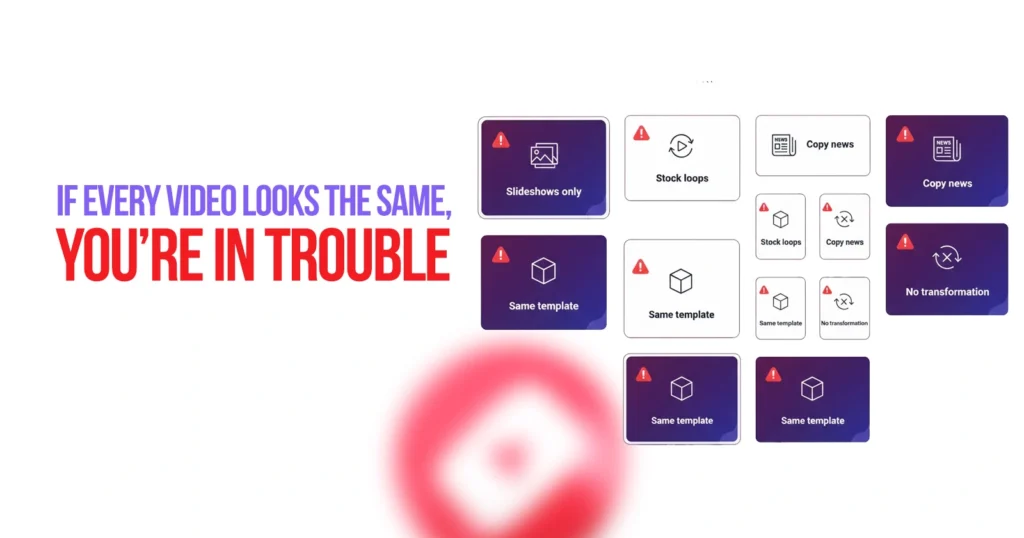
This is where most of the confusion clears up. When people hear about the new YouTube AI channel removal policy, they assume YouTube is targeting anything that looks automated or faceless. That’s not really what’s happening.
The pattern is simpler. Channels that feel repetitive, recycled, or low effort are the ones getting flagged. AI just happens to be the tool many of them use. According to Kapwing’s new research, 21-33% of YouTube’s feed may consist of AI slop or brainrot videos.
If a viewer can’t tell the difference between your video and 50 others, or if the content adds no original thought, the risk goes up fast.
Let’s look at the common channel types that are seeing demonetization or removals.
Fully Automated Voiceover Slideshows
These are usually the easiest for YouTube to detect. You’ve probably seen them. A basic slideshow of images or stock clips with a robotic text-to-speech voice reading facts pulled from Wikipedia or Reddit.
There’s little to no:
- Original commentary
- Personality
- Storytelling
- Low Editing effort
Even if the information is correct, the format feels mechanical. Viewers drop off quickly, which hurts retention. That’s a strong signal to YouTube that the content isn’t valuable.
Channels built entirely on this setup often struggle to stay monetized.
Stock Footage + AI Narration Channels
This format is slightly more polished but still risky when overused. Creators grab generic stock videos, add an AI voiceover, and publish daily uploads on topics like business tips, history facts, or motivation. The problem isn’t the footage or the AI. It’s that many of these videos look almost identical across different channels. When nothing feels unique or personal, YouTube may treat it as reused or non-transformative content.
If you’re using stock footage, you need stronger scripting, original insights, and smarter editing to stand out. Structuring longer, more in-depth videos with better SEO and retention strategies, like the methods explained here for ranking long-form videos effectively, helps move your content out of the “template” category.
Copy-Paste News or Facts Channels
These channels usually summarize trending news, celebrity gossip, or random facts without adding anything new.
Common signs include:
- Scripts pulled directly from articles
- The same story is published by dozens of channels
- No analysis or opinion
- Very fast turnaround
From YouTube’s perspective, this doesn’t feel original. It feels duplicated. When you share news, make sure to add your thoughts or some background information. Just saying the facts isn’t enough and can cause problems.
Bulk Uploads with Identical Templates
This is a big red flag. Some automation channels publish 5 to 10 videos a day using the exact same structure:
- Same intro
- Same background music
- Same pacing
- Same voice
- Just different text
When a lot of videos are made, it feels like a factory. Even if each video is new, they all seem the same. That usually leads to low watch time and weak engagement, which can trigger reviews under the YouTube Partner Program.
If you want to stay safe long term, it helps to understand how monetization eligibility really works and what YouTube checks during reviews, which is clearly broken down here.
Compilation and Reused Clips with No Transformation
Compilations can work, but only when they’re truly transformed.
Risky examples include:
- Reposted TikToks or Reels
- Movie or podcast clips stitched together
- “Top 10” videos with no commentary
- Viral moments reuploaded with minor edits
If you don’t add your own thoughts, jokes, or lessons to your videos, YouTube might think you are just using other people’s work. To get money from your videos, you need to change them and make them special.
Allowed vs Risky Channel Types
| Channel Type | Risk Level | Why |
|---|---|---|
| Fully automated slideshows with AI voice | High | Low effort, weak retention, little originality |
| Generic stock footage + AI narration | Medium to High | Feels templated and repetitive without strong scripting |
| Copy-paste news or facts videos | High | Not transformative, easily duplicated |
| Bulk daily uploads using the same format | High | Looks like automation or content farming |
| Compilations with commentary or analysis | Low to Medium | Safer when clearly transformative and original |
| AI-assisted videos with human storytelling | Low | Adds value, personality, and unique perspective |
The takeaway is pretty simple. The YouTube AI channel removal policy isn’t punishing creators for using AI. It’s targeting content that feels replaceable.
If your videos bring real insight, effort, and originality, you’re already on the safer side.
Wanna avoid your YouTube channel from getting flagged? ShortVids can offer a ban-proof content strategy, tailored just for you.
AI Content vs Reused Content: Where Most Creators Get Confused
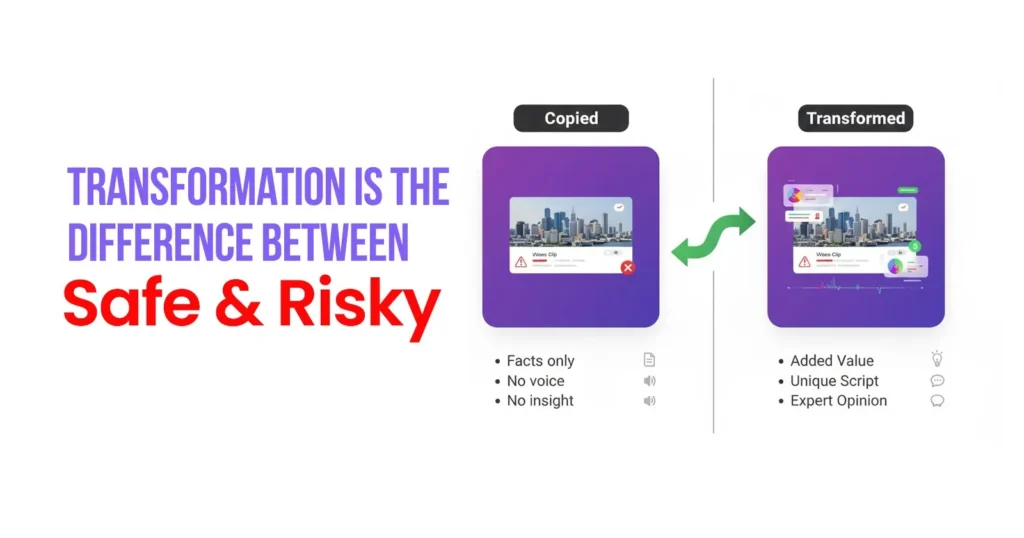
This is the part that trips up a lot of people. Many creators assume that the YouTube AI channel removal policy is against AI-generated videos. But YouTube rarely cares how you made something. It cares whether your video adds value.
AI content and reused content are not the same thing. You can use AI and still be completely original. And you can avoid AI entirely and still violate the rules by reposting or recycling other people’s work.
So the real question isn’t “Did you use AI?” It’s “Did you create something new or just remix what already exists?” Once you understand that difference, most of the policy starts to make sense.
For creators building faceless formats or voiceover-based channels, it helps to first understand how these models work and what makes them sustainable. The format itself isn’t the issue. Execution is.
What Counts as “Transformative”
Transformative content means you’ve added something that didn’t exist before. Your ideas, your structure, your storytelling, or your analysis should change the experience for the viewer. Even if you use stock footage or references, the final result should feel uniquely yours.
Here’s what usually counts as transformative:
- Original scripts and research
- Commentary or personal opinions
- Educational breakdowns or explanations
- Reactions, critiques, or analysis
- Creative editing, pacing, and storytelling
For example, using AI to help draft a script and then rewriting it in your own voice is fine. Using AI to generate visuals for a concept you designed is also fine. You’re still the creator. AI is just assisting.
What YouTube Considers “Low Effort”
Low effort is where most problems happen. This is content that looks like it was produced at scale with minimal thinking or originality. Viewers can feel it immediately.
Common signs include:
- Copied scripts from articles or other videos
- Text-to-speech reading facts with no insight
- The same template repeated across dozens of uploads
- Generic stock clips with no story
- Videos made just to chase keywords
These videos often suffer from low watch time and weak retention. That’s what really triggers YouTube’s systems. It’s not the AI voice that hurts you. It’s the fact that people click away after 20 seconds.
Creators who treat faceless channels like real brands and focus on stronger narratives, structure, and audience connection tend to perform much better, which is why understanding the strategic value behind these channels matters.
Real Examples
Let’s make this practical. Imagine two video channels that use the same tools.
Channel A makes five short videos each day with basic facts. They use AI voices and stock videos but do not add any fun or personal touch.
Channel B also uses AI tools, but they write their own scripts and tell stories, making their videos more engaging.
Both channels use AI, but Channel B feels special while Channel A seems replaceable. Channel B feels like a real creator.
Guess which one stays monetized.
AI vs Reused Content Scenarios
| Scenario | Safe or Unsafe | Explanation |
|---|---|---|
| AI helps draft script, then you rewrite and add commentary | Safe | Original ideas and transformation |
| Stock footage + custom storytelling and analysis | Safe | Adds clear value and uniqueness |
| Text-to-speech reading copied the article word for word | Unsafe | Not transformative, feels reused |
| Reuploading TikToks or clips with minor edits | Unsafe | Considered reused content |
| Same template video posted daily with different text | Risky | Low effort, repetitive, weak retention |
| AI-assisted animation or explainer made from scratch | Safe | Original creation with AI support |
The bottom line is simple. AI is a tool and reused content is a shortcut. The YouTube AI channel removal policy is designed to filter out shortcuts, not creativity. If your work feels thoughtful and genuinely helpful or entertaining, you’re already playing on the safe side.
How YouTube Detects Low Quality AI and Automated Channels
A lot of creators imagine that YouTube has some magic tool that simply “detects AI” and shuts channels down. It’s not that dramatic.
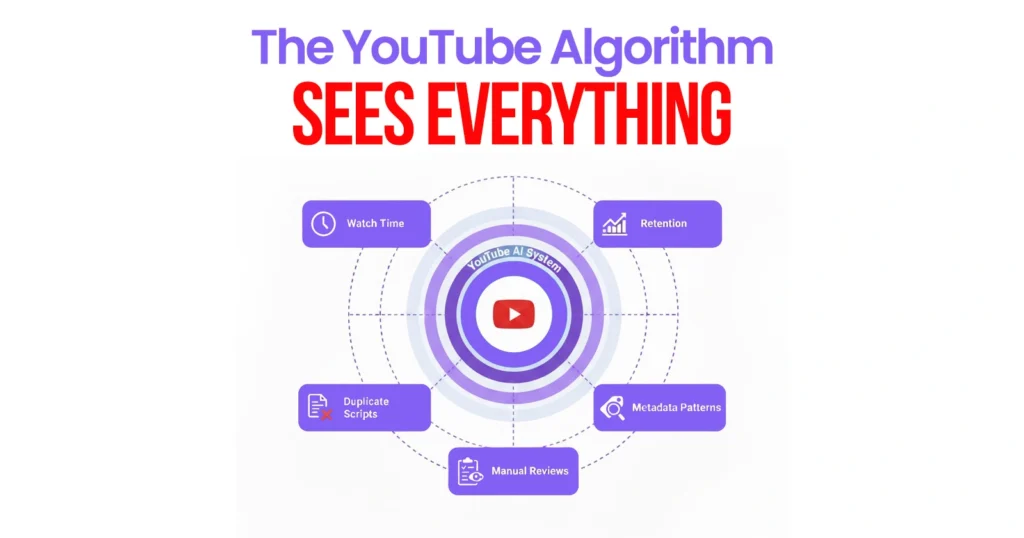
The YouTube AI channel removal policy isn’t powered by an AI detector that scans your voice or scripts. YouTube mostly looks at behavior and patterns. How do people watch your videos? How similar are your videos? And how has your channel performed over time?
The system checks how well your videos work, not just the tools you use. If people watch, like, and come back for more, that’s good. But if they leave quickly and your videos look the same, the system gets worried.
Here’s how it all works behind the scenes.
Watch Time and Retention Signals
This is YouTube’s biggest quality filter. The platform pays close attention to:
- Average watch time
- Audience retention
- Click-through rate (CTR)
- How often viewers abandon the video early
Videos that don’t take much effort to make can get a lot of clicks, but people often stop watching them quickly. They click on the video, see it’s not interesting, and leave in a few seconds. If many people do this, YouTube thinks the video isn’t good. If this happens with many videos, YouTube might check the channel.
It’s important to pay attention to how many people watch your videos. Keeping an eye on things like retention curves and watch time trends through clear performance tracking makes a big difference, which is why many creators regularly study their numbers using guides like this breakdown of key YouTube analytics metrics.
Duplicate Script Detection
This one surprises many people. YouTube can compare content patterns across videos and even across channels.
If your scripts look almost identical to:
- Other videos on your channel
- Dozens of similar channels
- Publicly available articles
It starts to look like recycled content. If you use AI to write without changing it, the words can end up sounding the same. That’s why some “top 10” videos sound alike. To make your writing special, use your own ideas and examples.
Metadata Patterns
Metadata tells YouTube a lot more than people think.
Things like:
- Repeated titles with minor word swaps
- Identical descriptions
- The same tags across hundreds of videos
- Bulk uploads in short time frames can signal automation
If your channel posts 20 similar videos in one day with the same title style, it doesn’t look real. It seems like you are just making lots of the same thing. To make it better, spread out your videos and treat each one like its own special video.
Manual Reviews
Not everything is automated. When a channel gets flagged by poor performance or suspicious patterns, real people often step in.
YouTube has review teams that manually check:
- Originality
- Editing effort
- Transformation
- Overall viewer value
This is where low-effort slideshows and basic voiceover compilations typically fall short. A human reviewer can quickly see if real effort was put into the video. No algorithm can match that ability.
Partner Program Audits
Monetization is another checkpoint. Before you join or stay in the Partner Program, YouTube reviews your channel to see if it meets quality standards. That includes checking whether your content feels original and advertiser-friendly.
Channels built mostly on reused or automated formats often lose monetization here, even if they still get views. So sometimes creators think, “My channel wasn’t removed, but ads stopped.” That’s usually the result of a Partner Program review.
AI Plus Human Moderation
It’s really a hybrid system. YouTube uses AI to scan millions of videos for patterns and performance issues. Then humans step in for context and judgment. So it’s not just bots making decisions. And it’s not just humans either.
That mix makes enforcement stricter and more accurate. This is why using only robots to do work can be risky. Robots often miss the little details and stories that humans add. Blending technology with real editing and creative input tends to perform better, which is exactly why many creators now combine tools with human oversight and refinement.
The takeaway is simple. YouTube doesn’t need to “detect AI.” It just looks for low-quality patterns. If your videos keep people watching and feel genuinely original, you’re already staying on the safe side of the YouTube AI channel removal policy.
Real Risks Creators Are Facing Today
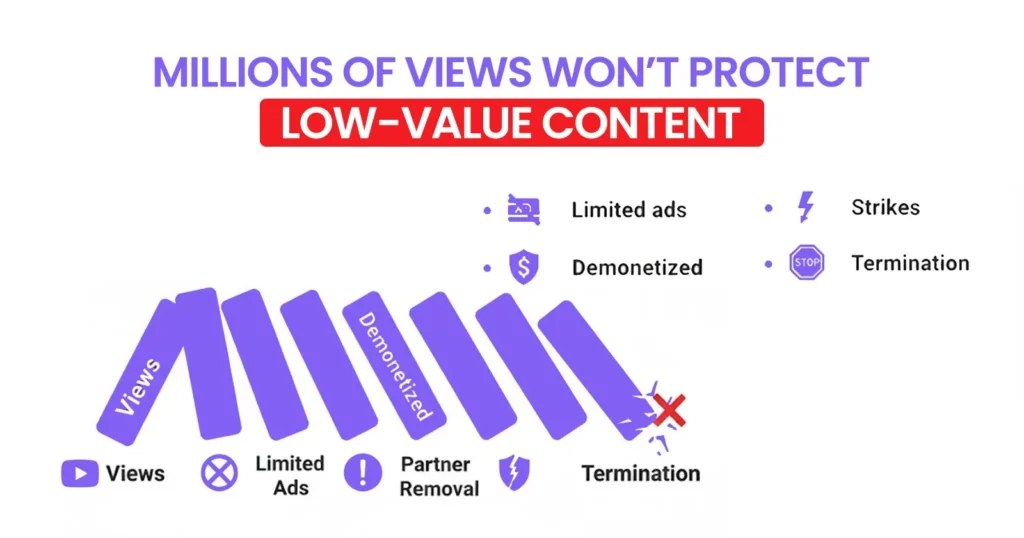
Some creators believe YouTube only focuses on spam channels. That’s not true anymore. Now, YouTube is stricter about fake content and videos that don’t have anything new. Even popular channels can get in trouble if their videos seem too similar or are not original.
These are the risks creators are actually seeing right now.
Demonetization
This is usually the first hit. Your channel stays live, but ads stop running. Revenue drops to zero overnight.
It often happens when YouTube decides your content is:
- Reused
- Repetitive
- Automated
- Lacking original commentary or transformation
Many AI voiceover or slideshow channels fall into this category.
Limited Ads
This one hurts quietly. Videos still earn money, but at a much lower CPM. If you see the yellow icon, don’t ignore it. It can make your money go down a lot over time.
- Templated formats
- Stock-heavy visuals
- Generic scripts
- Borderline repetitive topics
Channel Strikes
If YouTube sees policy violations beyond low quality, like reused copyrighted content or misleading automation, strikes come into play.
Three strikes can mean:
- Uploads blocked
- Live streaming disabled
- Channel removal
And strikes are harder to appeal than most people think.
Removal from the YouTube Partner Program
This is becoming more common with AI-heavy channels. YouTube reviews monetized creators regularly. If they believe your content doesn’t add enough value, you can be removed from the Partner Program even without strikes.
This means:
- No memberships
- No Super Thanks
- Zero ad revenue
- No monetization tools at all
You basically go back to zero.
Full Channel Termination
Worst case, but it happens. If YouTube classifies a channel as:
- Mass automated
- Spammy
- Built purely to exploit trends with little originality
They can shut it down completely. Sometimes without warning.
Why Billions of Views Don’t Guarantee Safety
Having lots of views doesn’t mean your channel is safe. Some channels with many views still get taken down or can’t make money. YouTube prioritizes quality over sheer number of views. If you have many videos that look the same, people checking your channel might pay more attention. More videos can lead to more checking. So, just getting more views won’t protect your channel.
What’s Still Allowed Under the YouTube AI Channel Removal Policy
Many people overlook this important point: YouTube is not against AI; it prefers videos that require minimal effort. AI can help with creativity, but it shouldn’t replace it. If a person adds their own ideas or personality, that’s usually okay. Let’s look at this more closely.
AI Assisted Editing
Totally acceptable for YouTube using AI for:
- Cutting clips
- Subtitles
- Background removal
- Auto highlights
- Thumbnail generation
This method speeds up your work without losing creativity. It helps you make better videos faster.
Script Ideation
Using AI to brainstorm topics or outlines is normal now.
Things like:
- Title ideas
- Research help
- Rough drafts
- Structure planning
To make your writing more personal, rewrite it from your perspective. If you want to create prompts that are effective and sound natural, this guide on building scalable prompts will help you achieve that. It keeps your outputs feeling more human and less generic.
Human Narration
Huge difference here. AI voice + generic stock footage often gets flagged as low value.
But real human narration:
- Adds personality
- Improves retention
- Signals originality
Even simple voiceovers recorded at home can make your content safer and more engaging.
Educational Explainers
It’s good to explain things in your own words. Use simple guides and videos to help people understand. Focus on teaching and giving clear examples instead of just changing words.
If you’re creating performance-driven content, learning how to create YouTube ads that convert can also help you structure videos around real value instead of filler.
Commentary and Storytelling Formats
Reaction videos, analysis, storytelling, or opinion pieces are naturally transformative.
That’s exactly what YouTube wants, if you’re adding:
- Perspective
- Emotion
- Interpretation
- Unique delivery
This is also why formats that focus on strong hooks and narrative pacing tend to outperform. If you’re studying what makes content spread, these viral YouTube video secrets break down what actually drives engagement.
At the same time, purely automated uploads often fail because they skip the human layer.
Allowed vs. Risky vs. Unsafe
| AI Use Case | Allowed? | Notes |
|---|---|---|
| AI for subtitles, cuts, editing | ✅ Yes | Considered production support |
| AI for topic research or outlines | ✅ Yes | Must add your own rewrite and insights |
| AI voice + stock slideshow | ⚠ Risky | Often flagged as low effort or reused |
| Fully automated daily uploads | ❌ Unsafe | Seen as mass-produced content |
| Human narration with AI-assisted editing | ✅ Yes | Strong originality signal |
| Commentary, reactions, storytelling | ✅ Yes | Transformative and creator-led |
| Copy-paste AI scripts with minimal change | ❌ Unsafe | Duplicate/low value risk |
How to Stay Safe and Monetize with AI in 2026
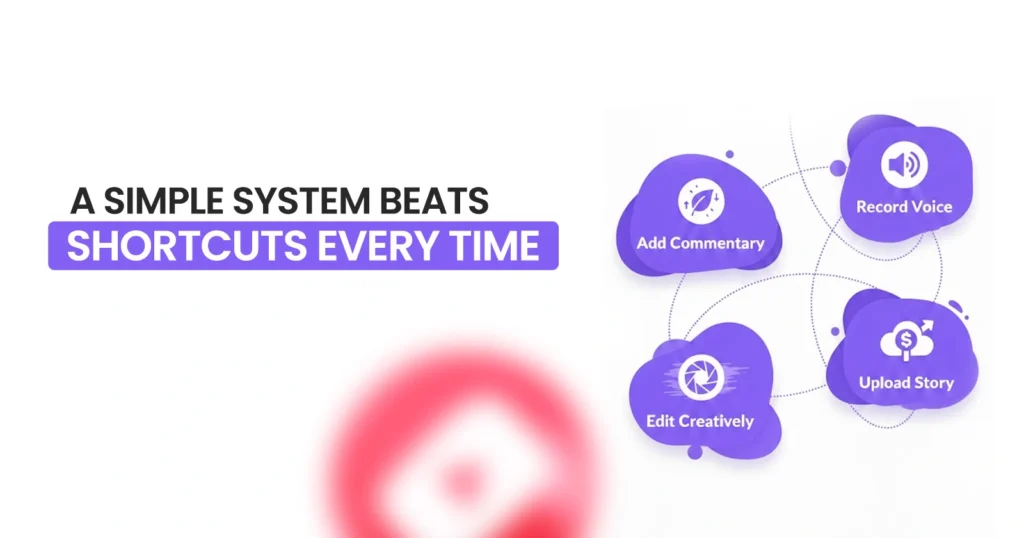
YouTube doesn’t punish creators for using tools. It only takes down videos that look fake or boring. If your videos are fun and helpful, you are usually okay. Think of AI as a helper, not the one who makes the videos.
Here’s how smart channels use it to make money.
Add original commentary
To be safe on YouTube, share your own ideas instead of copying others. Don’t just read facts or use scripts. You should:
- Share what you think
- Explain things in your own words
- Say why something matters
- Talk about your own experiences
Even small comments can make your videos special. This can help you earn money and stay out of trouble.
Record Real Voice or High-quality Narration
AI voices are easy to use, but they can feel fake. A real human voice
- Makes people trust you
- Helps listeners pay attention
- Sounds more special
- Feels less like a robot
Just a good microphone and a quiet place are enough. If you use AI voices, make sure to change them a lot and add your own style. Otherwise, it starts looking like every other copy-paste channel.
Edit Creatively Instead of Templated
Using templates for videos is quick, but they can look the same. If every video has the same:
- Style
- Changes
- Speed
- Pictures
It feels like they are all made the same way. Creative editing helps videos feel special. You can try things like:
- Surprising changes
- Quick cuts
- Adding words
- Zooming in
- Changing the speed
These tricks keep viewers interested. To make your videos better, think about how small changes can make them more fun!
Focus on Storytelling
Telling a story is better than just sharing facts. Simple videos work best if you plan them like this:
- Start with a hook
- Show a problem
- Take the viewers on a journey
- Offer a solution
- Give a takeaway
Instead of giving a lot of information, help viewers follow a story.
Using stories:
- Keeps people watching longer
- Helps them remember the content
- Makes it easier to get ads
The computer likes videos that people watch all the way through.
Avoid Mass Uploads
Posting 5 to 10 AI-made videos each day can look strange. Even if the videos are good, having so many might get people to check them closely. It makes it seem like they are made by a machine. A better plan is to make fewer videos but work harder on making them great.
One strong video usually outperforms ten average ones anyway.
If you’re repurposing content, do it thoughtfully. This guide to repurposing YouTube videos shows how to transform clips properly instead of just recycling them.
Build Brand Authority
Channels that use no face or AI still need a good brand. Without a brand, they seem like everyone else. To be trusted, you should:
- Have a clear style
- Focus on a specific topic
- Use a voice people can recognize
- Share new ideas
- Provide helpful tips
When people can easily tell your work apart, they trust you more. Even if you use AI avatars, having a strong identity is important. This AI avatar influencer creation guide explains how to make it feel like a real brand instead of a bot farm.
A Simple Pre-Publish Checklist for YouTube AI Creators
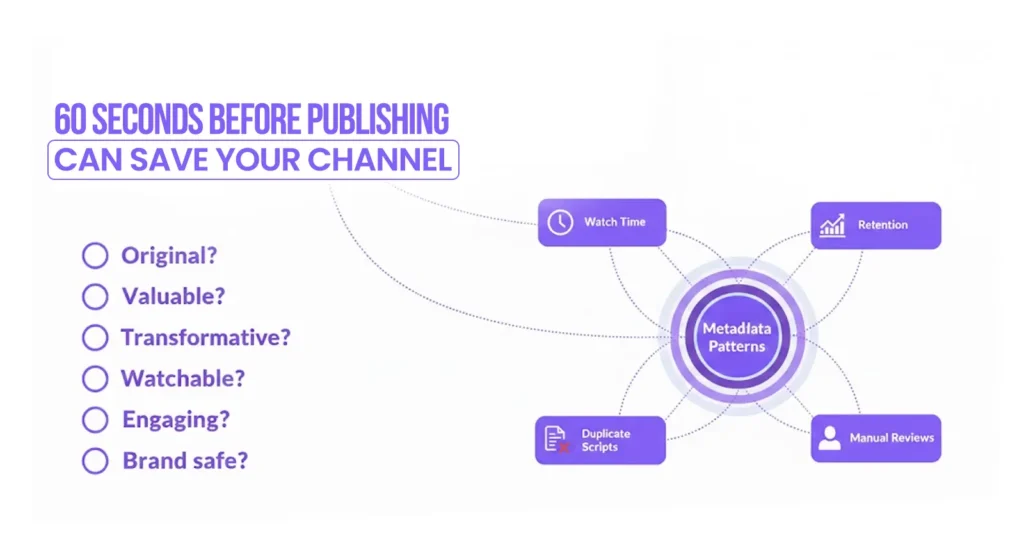
Before you publish, take a quick minute to check this. It can help you avoid problems later.
- Is this original, or does it feel like something anyone could generate?
- Does it add real value or just summarize existing content?
- Is it clearly transformative with commentary, insight, or personality?
- Would someone actually watch this till the end?
- Does it feel human and trustworthy?
- Is it advertiser-friendly and brand safe?
- Does the editing look intentional rather than templated?
If you are unsure about your answers, your video might need more work. If you feel happy to show your face or name in it, that’s good.
Frequently Asked Questions
YouTube is not banning AI channels. It aims to remove low-quality or copied videos. You can use AI to create original content. The problem happens when videos look rushed and are not unique.
You can make money from videos that use AI. Your videos should be new and helpful. Many people use AI to help them create faster, but still add their own ideas. If your video is fun and useful, it can make money from ads.
You can make videos without showing your face, and it’s safe if done right. YouTube doesn’t ask for faces. The key is to create fun and helpful content. A good video with a voiceover is better than a boring slideshow. What matters is how much effort you put in and how useful your video is.
Text-to-speech tools are useful, but if your videos sound monotone, viewers may lose interest. To improve your content, focus on strong scripts, careful editing, and fresh ideas. This will make your videos more engaging and enjoyable.
There is no fixed number of violations that ensure safety. Some lead to warnings, while others quickly result in restrictions or removal. Many channels lose monetization before formal strikes occur. It’s better to focus on quality and compliance from the start rather than relying on chance.
Getting back on YouTube is possible. Creators can be approved again if they make their videos better, fix reused parts, and add better comments. YouTube wants channels that are helpful. When the videos are better, they can earn money again.
Final Thoughts
YouTube AI channel removal policy focuses on trust and quality, not on limiting modern tools. Prioritize originality and clear storytelling to protect your channel. Use AI to assist, not replace your creativity, for long-term growth.
ShortVids is a great long-term partner for brands and creators seeking viral YouTube channels. Call ShortVids to boost your channel with our unlimited video editing services starting at $999 per month.
Book a Call Today
- Fixed monthly plans starting at $999
- 24-hour turnaround time (or less) on all short-form edits
- 3-layer quality check system on every video
- No more chasing freelancers or managing editors
- Scale up to 50+ videos/month without hiring in-house
- Content team trained on platform trends, scroll-stopping hooks & storytelling
- Fully managed by professionals – you just upload & approve
- Response time: Under 1 hour (US & GCC time zones)
Cut your production costs, not your standards.